Plant Health Care Specialists
Root Collar Excavation & Air Spading in North Augusta, Aiken, and the CSRA
Is a tree slowly declining for no obvious reason, or does the trunk go straight into the ground like a fence post with no visible flare at the base? A buried root flare and girdling roots are among the most common and most overlooked causes of tree decline, and Arborwright uses air spading to expose and correct them without harming a single healthy root. Serving North Augusta, Aiken, Augusta, Evans, Martinez, and the surrounding CSRA.
- Biology Degreed Team
- Girdling Root Correction
- Root Collar Excavation
Get your FREE
Tree Inspection
We’ll call you within one business day to schedule your free on-site inspection. No obligation, no hard sell, no upsells you don’t need.
By submitting, you agree we may contact you by phone, text, or email about your request. Msg/data rates may apply. Reply STOP to unsubscribe. See our Privacy Policy.

What is root collar excavation?
Root collar excavation is the careful removal of excess soil and mulch from the base of a tree to expose the root flare, the point where the trunk widens into the roots, which is supposed to sit at the soil surface. Using air spading, high-pressure air that moves soil without cutting roots, an arborist can uncover a buried flare, find girdling roots strangling the trunk, and correct both before they kill the tree. Arborwright provides root collar excavation across North Augusta, Aiken, and the CSRA.
How do I know if my tree has a buried root flare?
You are in the right place if a tree is declining with no clear cause, or if its trunk plunges straight into the ground with no visible flare at the base. On CSRA properties this is common on trees that were planted too deep, mulched into a volcano, or buried by years of added soil and grading.
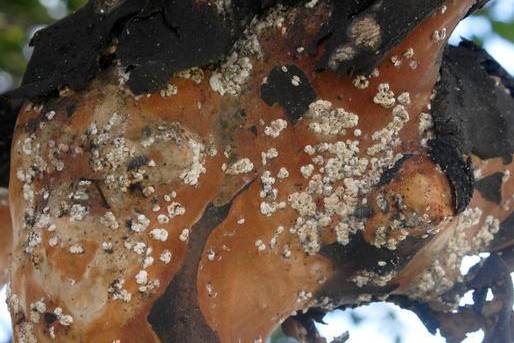
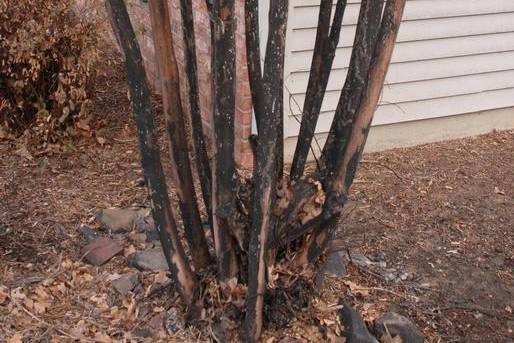

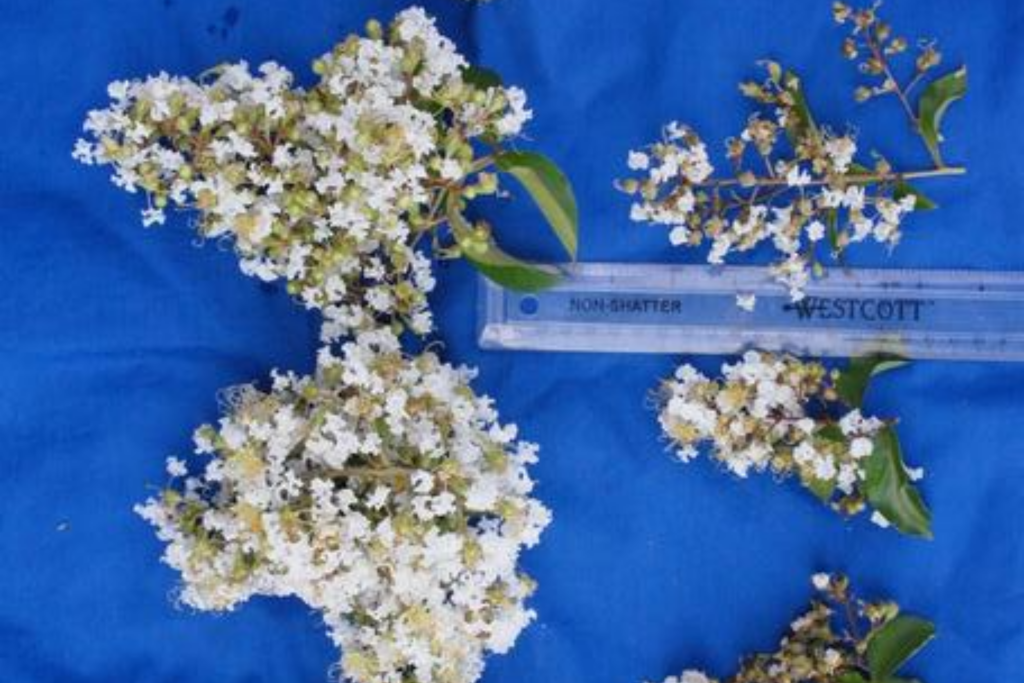
- Trunk goes straight down like a fence post
- No visible flare where trunk meets soil
- Mulch piled high against the trunk
- Slow, unexplained decline or thin canopy
- Roots circling at the base of the trunk
- Bark dark, soft, or peeling near the soil
Not sure if your tree’s flare is buried? Send us a photo of the base for free input within 24 hours.
Why is the dirt against the trunk killing more trees than any pest?
Most of the slow, unexplained declines we investigate start below the soil line. A tree planted too deep, a grade raised during landscaping, or years of mulch piled against the trunk can bury the root flare under enough soil to keep it constantly damp. Bark is not built to live underground, so it deteriorates, the vascular tissue weakens, and the tree begins a decline that looks like drought stress or nutrient deficiency because nobody has looked at the base.
Girdling roots are a separate and often hidden problem. Most develop during container production, when roots hit the wall of the pot and begin circling rather than growing outward. If those roots are not corrected at planting they continue that pattern in the ground, and as the trunk and the circling root both thicken over years, the root presses into the vascular tissue like a rope slowly tightening. The tree thins, struggles asymmetrically, and declines, and no spray or fertilizer will ever fix it because the problem is mechanical.
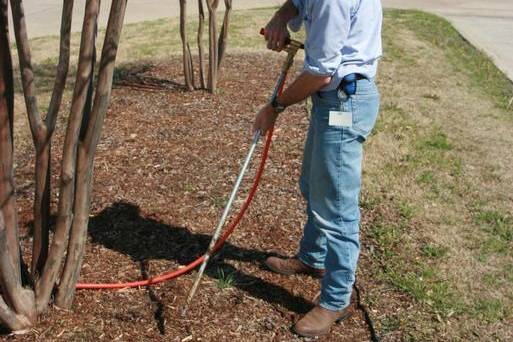
You cannot assess what you cannot see, and you cannot dig at the base of a tree with a shovel without slicing the roots you are trying to evaluate. A frequent tool of ours is the air spade, which uses high-pressure air to blow soil away while leaving roots intact, exposing the flare and the root structure exactly as they are. What that reveals guides everything that follows. We remove girdling roots, pull soil and mulch back off the flare, and where compaction is part of the problem, fracture and amend the root zone so the tree has something to recover into. It is one of the few treatments where you see the cause of a decline with your own eyes.

How does Arborwright excavate a root collar?
Step 01 · Assess the base
We start by reading the symptoms and the base of the tree: no visible flare, mulch piled high, decline with no obvious cause. If a buried flare or girdling roots are likely, air spading is how we confirm it.
Step 02 · Air spade the soil
A high-pressure air tool removes the soil and mulch from around the trunk and flare without cutting a single root. This exposes the root structure exactly as it is, something no shovel can do safely.
Step 03 · Inspect and correct
With the flare exposed, we identify and remove girdling roots strangling the trunk, clear the soil and mulch off the flare, and assess the damage already done. The corrections are made based on what the excavation actually reveals.
Step 04 · Restore and monitor
We grade the soil back to leave the flare exposed at the surface where it belongs, mulch correctly and away from the trunk, and set a plan to monitor the tree's recovery over the coming seasons.
What to expect from root collar excavation
DAY 0
Excavation and correction
On-site air spading exposes the flare, and girdling roots are removed and the base corrected in the same visit.
WEEK 1 TO 4
Relief
With the flare exposed and constricting roots removed, the trunk dries out and the immediate pressure on the tree eases.
SEASON 1
Early response
A tree caught in time often shows steadier color and growth over the next growing season as it recovers.
YEAR 1 TO 2
Recovery
Real recovery is gradual. The tree rebuilds vigor over a few seasons, and we monitor to confirm the decline has stopped.
What excavation looks like
How much a tree recovers depends on how long the problem went uncorrected. A buried flare caught early often turns a declining tree around within a season or two. A tree with severe girdling damage may stabilize rather than fully rebound, but in both cases the cause is removed instead of masked, which is the only way the tree has a chance.
Why CSRA homeowners choose Arborwright

Diagnostic-first tree care
Most tree services start with “what do you want us to do?” We start with “what’s actually going on?” Arborwright is built around plant health care and diagnostic-first work, which means we look at your tree, identify what’s wrong, and tell you honestly what it needs. Sometimes that means treatment. Sometimes it means a pruning plan. Sometimes it means removal. We tell you which, with the evidence to back it up.
Our arborists know the CSRA’s soils, humid subtropical climate, and the tree species that thrive and struggle here. Local conditions matter. We show up prepared for them.
Science-based diagnostics
Every recommendation backed by plant pathology, soil science, and real evidence.
Honest recommendations
We tell you what your tree actually needs, even when it's less work for us.
The people behind arborwright
Real credentials. Real expertise. Real local knowledge.

Burns Newsome
Founder & Plant Health Care Specialist
Licensed Applicator | B.S. Biology + M.S. Genetics | Former Vanderbilt Research Team
I come from a research background. Before founding Arborwright Tree Care, I spent several years as part of a research team at Vanderbilt University Medical Center, where careful observation and methodical thinking defined the job. I hold two degrees in the biological sciences, and I apply that same research-first mindset to every tree I evaluate.
What drives my work is a deep passion for healthy ecological landscapes. I believe most struggling trees can be saved when the right diagnosis comes first. Removal is a last resort, not a default. Across North Augusta, Aiken, Augusta, and the rest of the CSRA, I help homeowners understand what’s actually happening with their trees, from crape myrtle bark scale to root stress to storm damage, and build treatment plans backed by evidence instead of guesswork.
When I’m not in the field, I’m on my own land with my two boys: catching critters, fishing, and managing the property to support the greatest diversity of life it can hold. That’s how this business started. At some point, working within the constraints of my own backyard wasn’t enough. I wanted to care for the landscape around me in a meaningful way, and help the people in my community do the same. Arborwright is how I do that.
Thomas Wilson
ISA Certified Arborist®
ISA Certified Arborist® | ISA Member | 13 Years of Field Experience
I came up in tree work in Tennessee, where I spent years climbing, pruning, and learning how trees actually behave under load and stress. There is no shortcut for that kind of time in the canopy. When I moved to the CSRA, I brought that hands-on foundation with me and adapted it to a new set of species, the region’s soils, and a much longer growing season.
Earning my ISA Certified Arborist® credential held that field experience to a documented, tested standard. My focus is structure and risk: how a tree is built, where it is weak, and what it is likely to do in the next storm. I would rather find a failure point on a calm afternoon than after a limb is already down on someone’s roof.
What I value most is the work that keeps a mature tree standing. A large, established tree takes decades to replace, and most of the ones I assess can be kept healthy and sound when someone reads them early and acts on what they find. That is the part of this job I care about, and it is why I am glad to do it here in the CSRA.
Root collar excavation pricing
The on-site assessment is free. Root collar excavation is typically priced per tree and ranges depend on the factors below.
- Tree size and trunk diameter
- How deeply the flare is buried
- Severity of girdling roots
- Number of trees treated
- Soil type and access
- Corrective work required
Free assessment includes
Your free assessment includes a look at the base of the tree and its symptoms, an honest call on whether a buried flare or girdling roots are the likely cause, and itemized pricing for the excavation. Burns walks you through it on site, with no obligation and no pressure.
Frequently asked questions
Everything homeowners ask before scheduling root collar excavation.
The on-site assessment is free, and excavation is usually priced per tree. Cost depends on the tree’s size, how deeply the flare is buried, the severity of any girdling roots, and the corrective work involved. Arborwright confirms a buried flare or girdling roots are the likely cause first, so the work addresses the real problem rather than a guess.
Air spading uses a tool that releases a stream of high-pressure air to move soil away from a tree’s base and roots. Because air does not cut, it exposes the root flare and root structure without damaging them, something a shovel cannot do. It is the standard way arborists uncover a buried flare or find girdling roots.
A tree’s root flare is meant to sit above ground in the open air. Buried under soil or mulch, the bark stays wet and slowly rots, and the conditions encourage roots to circle and strangle the trunk. A buried flare is one of the most common causes of slow, unexplained decline in landscape trees, and it is correctable when caught in time.
Girdling roots are roots that circle the trunk instead of growing outward, often from being planted too deep or potted too long. As the root and trunk thicken, the root presses into the trunk and chokes the tissue that carries water and food, like a slow tourniquet. Left alone, they can decline and kill an otherwise healthy tree.
Yes. A mulch volcano, mulch mounded up against the trunk, holds moisture against bark that is meant to stay dry, leading to rot and encouraging girdling roots. Mulch belongs spread in a flat ring that stays a few inches off the trunk. Correcting a mulch volcano is often part of a root collar excavation.
An arborist air spades the soil and mulch away from the base of the tree, exposing the root flare and root structure without cutting any roots. Girdling roots strangling the trunk are identified and removed, the flare is cleared, and the soil is graded back so the flare sits at the surface where it belongs. Recovery is then monitored.
It depends on how long the problem went uncorrected. A buried flare caught early often turns a declining tree around within a season or two. A tree with severe, long-standing girdling damage may stabilize rather than fully rebound. In both cases the actual cause is removed instead of masked, which gives the tree its best chance to recover.
Most companies never look below the soil line, so a buried flare or girdling roots get missed and the tree gets treated for the wrong thing. Arborwright air spades to see the real cause. Burns Newsome brings two degrees in the biological sciences with a focus on diagnosis before the treatment.
Very. Many landscape trees in the region were planted too deep or buried over the years by added soil, grading, and mulch, and the humid climate speeds the bark rot that follows. The clay-heavy soils also hold moisture against a buried trunk. It is one of the most common hidden problems found on established CSRA properties.
Being present for the assessment helps so the findings are clear, but the excavation itself does not require you to be home if access to the tree is arranged in advance. Air spading is done at the base of the tree, the displaced soil is cleaned up, and the area is left tidy and safe to use once the visit is finished.
Trusted by homeowners across the CSRA
Real reviews from real customers across North Augusta, Augusta, Aiken, and the CSRA. Want to be one of them? Schedule your free inspection.
Root collar excavation near you
Arborwright provides root collar excavation and air spading across North Augusta and Aiken, into Augusta, Evans, Martinez, and Grovetown, and the wider CSRA including Edgefield, Columbia County, and Aiken County. Find your area below.
North Augusta, SC
Hammond’s Ferry, Riverview Park, downtown North Augusta. Our home base.
Augusta, GA
West Augusta, Summerville, National Hills, Forest Hills, downtown.
Aiken, SC
Downtown Aiken, Houndslake, Woodside, Hitchcock Woods area.
Evans, GA
Riverwood Plantation, Evans to Locks, Kiokee.