Plant Health Care Specialists
Tree Growth Regulator Treatment in North Augusta, Augusta, and Aiken
A tree that has outgrown its spot, keeps needing heavy pruning, or is struggling and you would rather help than cut? Arborwright applies Cambistat, a growth regulator that slows a tree’s top growth and redirects that energy into denser foliage, stronger roots, and better stress tolerance. Free on-site assessment across North Augusta, Augusta, Aiken, and the rest of the CSRA.
- Biology Degreed Team
- Tree Growth Regulator
- Licensed Applicator
Get your FREE
Tree Inspection
We’ll call you within one business day to schedule your free on-site inspection. No obligation, no hard sell, no upsells you don’t need.
By submitting, you agree we may contact you by phone, text, or email about your request. Msg/data rates may apply. Reply STOP to unsubscribe. See our Privacy Policy.

What is a tree growth regulator?
A tree growth regulator is a soil-applied treatment that slows a tree’s shoot growth for about three years, so the tree spends less energy stretching upward and more on roots, foliage, and defense. Arborwright uses Cambistat, a paclobutrazol-based regulator, to manage trees that have outgrown their space and to improve the health of stressed or mature trees. Available across North Augusta, Augusta, Aiken, and the CSRA.
When does a tree need a growth regulator?
Growth regulation makes sense when a tree is growing faster than its space allows, or when a stressed or mature tree would benefit from putting its energy somewhere other than new height. On CSRA properties this comes up most with fast-growing trees crowding the house or power lines, and with large, established trees under stress.

- A tree outgrowing its space
- Repeated heavy pruning every year or two
- Branches crowding the house or power lines
- A fast-growing tree in a tight spot
- A tree you would rather slow than top
- Roots beginning to lift nearby pavement
Not sure if growth regulation is right for your tree? Send us a photo for free input within 24 hours.
Managing growth without a saw
A fast-growing tree is usually a healthy one, and most of the time that is exactly what you want. The trouble starts when growth runs ahead of what the tree or the site can support. A tree pushing several feet of new shoot a year in a tight planting strip is not thriving so much as outgrowing its spot, and a tree flushing soft growth on a steady diet of lawn fertilizer is building the tender, nitrogen-rich tissue that aphids and scale find first. Growth is not the enemy. Growth in the wrong place, or the wrong kind of growth, is the thing worth managing.
A growth regulator lets you manage that without a saw. Cambistat, the paclobutrazol product we use, slows the hormone that drives shoot elongation and cuts top growth by roughly half for about three years. The tree keeps living and photosynthesizing, it just stops stretching. Research consistently shows denser, greener foliage and thicker, tougher leaves alongside that, and treated trees often come through drought better, largely because they transpire more conservatively, not because they suddenly grew a bigger root system. Some trees do respond with more fine roots, though that effect is less consistent and tends to show up in the trees that needed the roots to begin with.
That gives it two honest uses. The first is the obvious one, a tree crowding the house or the power lines, where regulating growth is a gentle alternative to topping. The tree keeps its natural form, needs pruning far less often, and never comes back in the weak, fast shoots that topping triggers. The second is narrower. When a tree’s roots have been cut by construction, or it was recently transplanted, or its canopy is working in too little soil, the top can outrun the roots that supply it, and slowing the canopy eases that demand while the roots recover. That use depends on the root deficit being the actual problem and not a symptom of compaction, drainage, or disease that needs solving directly, which is why it starts with an assessment rather than a jug of product. Cambistat is a regulated product applied as a soil drench and dosed to trunk diameter, which is a Licensed Applicator’s job. Burns Newsome handles that with two degrees in the biological sciences and applies it to the Cambistat label, on the trees where the science actually fits.

How does Arborwright apply Cambistat?
Step 01 · Assess the fit
Growth regulation is the right tool for some trees and the wrong one for others. We assess the tree, its situation, and your goal, whether that is size management, fewer prunings, or improving a stressed tree, before recommending it.
Step 02 · Calculate the dose
Cambistat is dosed to the tree's trunk diameter and species, following the product label. Correct dosing is everything: too little does nothing, too much over-suppresses the tree, so the measurement comes before the mix.
Step 03 · Apply the soil drench
The regulator is applied as a soil drench at the root flare, where the tree takes it up through the roots. There is nothing sprayed into the air and no pruning wounds, and the tree absorbs it over the following weeks.
Step 04 · Monitor the cycle
One application typically lasts about three years. We track the tree's response over that window, denser foliage and reduced growth in the first season, and plan the next treatment only when the effect begins to taper.
What to expect from a Cambistat treatment
DAY 0
Assessment and application
On-site assessment, then the soil drench when growth regulation is the right tool and the timing fits.


WEEK 4 TO 12
Uptake
The tree takes the regulator up through its roots over the following weeks, with no visible change yet.
SEASON 1
Visible response
Top growth slows noticeably, and foliage comes in denser and greener as energy is redirected.

YEAR 1 TO 3
Full effect
Reduced growth and improved vigor hold for about three years before a touch-up treatment is considered.
What regulation looks like
In the first full season, shoot growth drops by roughly half and the canopy fills in denser and darker green. Over the three-year cycle, the tree needs far less pruning, holds up better to stress, and builds a stronger root system. When the effect tapers, a single follow-up application renews it.
Why CSRA homeowners choose Arborwright


Diagnostic-first tree care
Most tree services start with “what do you want us to do?” We start with “what’s actually going on?” Arborwright is built around plant health care and diagnostic-first work, which means we look at your tree, identify what’s wrong, and tell you honestly what it needs. Sometimes that means treatment. Sometimes it means a pruning plan. Sometimes it means removal. We tell you which, with the evidence to back it up.
Our arborists know the CSRA’s soils, humid subtropical climate, and the tree species that thrive and struggle here. Local conditions matter. We show up prepared for them.
Science-based diagnostics
Every recommendation backed by plant pathology, soil science, and real evidence.
Honest recommendations
We tell you what your tree actually needs, even when it's less work for us.
The people behind arborwright
Real credentials. Real expertise. Real local knowledge.

Burns Newsome
Founder & Plant Health Care Specialist
Licensed Applicator | B.S. Biology + M.S. Genetics | Former Vanderbilt Research Team
I come from a research background. Before founding Arborwright Tree Care, I spent several years as part of a research team at Vanderbilt University Medical Center, where careful observation and methodical thinking defined the job. I hold two degrees in the biological sciences, and I apply that same research-first mindset to every tree I evaluate.
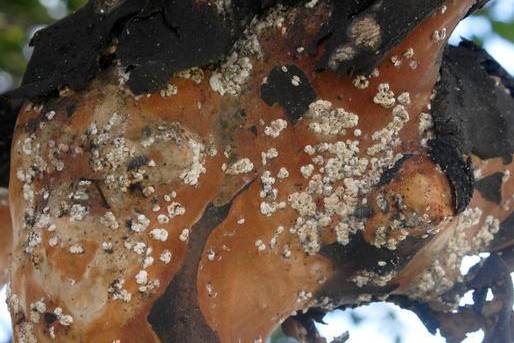
What drives my work is a deep passion for healthy ecological landscapes. I believe most struggling trees can be saved when the right diagnosis comes first. Removal is a last resort, not a default. Across North Augusta, Aiken, Augusta, and the rest of the CSRA, I help homeowners understand what’s actually happening with their trees, from crape myrtle bark scale to root stress to storm damage, and build treatment plans backed by evidence instead of guesswork.
When I’m not in the field, I’m on my own land with my two boys: catching critters, fishing, and managing the property to support the greatest diversity of life it can hold. That’s how this business started. At some point, working within the constraints of my own backyard wasn’t enough. I wanted to care for the landscape around me in a meaningful way, and help the people in my community do the same. Arborwright is how I do that.
Thomas Wilson
ISA Certified Arborist®
ISA Certified Arborist® | ISA Member | 13 Years of Field Experience
I came up in tree work in Tennessee, where I spent years climbing, pruning, and learning how trees actually behave under load and stress. There is no shortcut for that kind of time in the canopy. When I moved to the CSRA, I brought that hands-on foundation with me and adapted it to a new set of species, the region’s soils, and a much longer growing season.
Earning my ISA Certified Arborist® credential held that field experience to a documented, tested standard. My focus is structure and risk: how a tree is built, where it is weak, and what it is likely to do in the next storm. I would rather find a failure point on a calm afternoon than after a limb is already down on someone’s roof.
What I value most is the work that keeps a mature tree standing. A large, established tree takes decades to replace, and most of the ones I assess can be kept healthy and sound when someone reads them early and acts on what they find. That is the part of this job I care about, and it is why I am glad to do it here in the CSRA.

Tree growth regulator pricing
The on-site assessment is free. Cambistat is typically priced per tree by trunk diameter and ranges depending on the factors below.
- Tree size and trunk diameter
- Number of trees treated
- Tree species and condition
- Your goal for the treatment
- Single tree or property-wide
- Three-year treatment cycle
Free assessment includes
Your free assessment includes an honest call on whether growth regulation fits your tree and your goal, the recommended dose, and itemized pricing for the three-year cycle. We walk you through it on site, with no obligation and no pressure.
Frequently asked questions
Everything homeowners ask before scheduling a Cambistat treatment.
The on-site assessment is free, and Cambistat is usually priced per tree by trunk diameter. One application lasts about three years, so the cost spreads across that cycle. Arborwright assesses whether growth regulation actually fits the tree and your goal first, so you are not paying to treat a tree that does not need it.
Cambistat is a paclobutrazol-based growth regulator applied as a soil drench at the base of the tree. It slows the hormone that drives shoot growth, cutting top growth by roughly half for about three years. The energy the tree would have spent growing taller goes instead into denser foliage, more fine roots, and better stress tolerance.
Applied at the correct dose, no. It does not stunt or damage the tree, it rebalances where the tree spends its energy. The risk is incorrect dosing: too much over-suppresses growth, which is why the dose is calculated to the trunk’s diameter and applied by a Licensed Applicator following the product label.
An arborist confirms growth regulation fits the tree and your goal, measures the trunk to calculate the dose, and applies Cambistat as a soil drench at the root flare. The tree takes it up through the roots over the following weeks. Nothing is sprayed and there are no pruning wounds, and one application lasts about three years.
In the first full growing season, the tree’s top growth slows by about half and the canopy fills in denser and greener as energy is redirected. Over the three-year cycle, the tree needs much less pruning and tends to handle drought and stress better. The change is gradual, not an overnight difference.
Growth regulation is a niche tool most companies do not offer or understand. Arborwright uses it where the science fits and says no where it does not. Burns Newsome brings two degrees in the biological sciences and a Licensed Applicator’s license, and the treatment is dosed and applied to the Cambistat label rather than guessed at.
For a tree that is too big for its space, yes. Topping cuts a canopy back to stubs, disfigures the tree, and triggers weak, fast regrowth that needs cutting again. A growth regulator slows growth gently so the tree stays in bounds and needs far less pruning, without the wounds and weak limbs that topping creates.
It can slow a fast-growing tree so the problem does not get worse, but it does not undo damage already done or shrink existing roots. A tree already lifting pavement usually needs a separate look at root management or, in some cases, removal. The honest assessment comes first, since regulation is a forward-looking tool, not a repair.
About three years per application for most trees. Growth slows the most in the first two seasons and gradually returns as the effect tapers in the third. Arborwright tracks the response and recommends a follow-up application only when the regulation begins to wear off, rather than treating on a fixed schedule.
Being present for the assessment helps so the plan is clear, but the application itself does not require you to be home if access to the tree is arranged in advance. The soil drench goes in around the base of the tree, leaves no mess on the lawn, and the area is safe to use normally once the visit is finished.
Trusted by homeowners across the CSRA
Real reviews from real customers across North Augusta, Augusta, Aiken, and the CSRA. Want to be one of them? Schedule your free inspection.
Tree growth regulator treatment near you
Arborwright Tree Care provides plant health care, tree services, and arborist consultations across North Augusta, Augusta, Aiken, Evans, Martinez, and the surrounding CSRA. Find your area below.
North Augusta, SC
Hammond’s Ferry, Riverview Park, downtown North Augusta. Our home base.
Augusta, GA
West Augusta, Summerville, National Hills, Forest Hills, downtown.
Aiken, SC
Downtown Aiken, Houndslake, Woodside, Hitchcock Woods area.
Evans, GA
Riverwood Plantation, Evans to Locks, Kiokee.