Plant Health Care Specialists
Plant Health Care in North Augusta, Aiken, and the CSRA
Most tree companies wait until a tree has to come down. We work to keep it standing. Our licensed specialists diagnose what is wrong, treat it at the source, and build the tree back to health.
- Tree Risk Assessments
- Biology Degreed Team
- Pest & Disease Treatment
Get your FREE
Tree Inspection
We’ll call you within one business day to schedule your free on-site inspection. No obligation, no hard sell, no upsells you don’t need.
By submitting, you agree we may contact you by phone, text, or email about your request. Msg/data rates may apply. Reply STOP to unsubscribe. See our Privacy Policy.

What is plant health care?
Plant health care is the ongoing practice of keeping trees and shrubs healthy through diagnosis, treatment, and prevention, rather than only reacting once they fail. It is the difference between a tree service that shows up to cut something down and an arborist who works to keep it alive in the first place.
Good plant health care runs on three moves. First you diagnose accurately, because the wrong diagnosis wastes money and time. Then you treat the actual problem at its source, whether that is an insect, a disease, or a root issue. Then you strengthen the tree so it can defend itself, through soil, roots, and structure. Skip the diagnosis and everything after it is a guess.
This matters more in our area than most people expect. Trees across the greater Augusta area and the wider CSRA are under real pressure from drought, from pests like southern pine beetle and crape myrtle bark scale, and from soil that was often stripped during construction. A tree that looks fine today can be well into decline underneath. Catching that early is almost always cheaper than removal and replacement later.
What we are seeing in 2026
Extended drought across the area has kept stress-driven pests active this year, especially southern pine beetle, ambrosia beetles, and crape myrtle bark scale. Trees weakened by dry seasons are more vulnerable right now, which makes early diagnosis more important than usual.
Our plant health care services
Every service below fits one of the three moves. Start with a diagnosis, treat what we find, and strengthen the tree for the long run.
Diagnose
A full workup from the canopy down to the root flare, so you know exactly what you are dealing with.
Lab-backed testing that shows what your soil is missing or holding onto, since many tree problems in this area start below ground.
Treat
Targeted control matched to the specific problem instead of blanket spraying.
For the white, waxy scale and black sooty mold taking over crape myrtles across the area.
Protection for healthy pines and fast response to active southern pine beetle attacks.
Accurate diagnosis and preventive injection, since most declining oaks here have something else.
Care for the boxwoods, azaleas, camellias, and hollies, not only the large trees.
Treatment delivered directly inside the tree, the precise alternative to spraying.
Strengthen
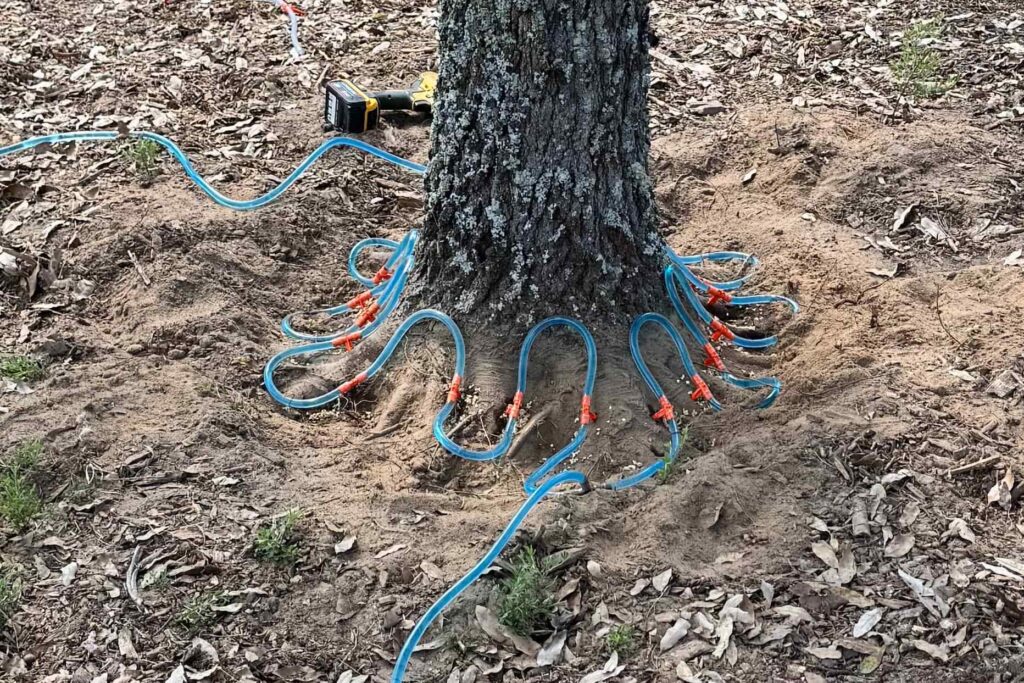
Nutrients delivered straight to the root zone to help a stressed tree recover.
Uncovering a buried root flare and relieving girdling roots, a hidden cause of decline.
Slows top growth and redirects energy into roots and defense, reducing stress.
Why Arborwright leads with plant health care
Most tree companies are built around trucks and chainsaws. We built ours around diagnosis. Our plant health care work is led by Burns Newsome, a Licensed Applicator with two degrees in the biological sciences and a background in university research. When your tree is struggling, someone who understands the biology is reading the symptoms, not guessing at them.
It also means we are honest about what a tree needs. Sometimes that is a single treatment. Sometimes it is a year-long program. And sometimes the right answer is that a tree cannot be saved and removal is the safe call. Whether we are on a property in North Augusta, Aiken, or across the river in Augusta, you get a real diagnosis, not a sales pitch.

Whether you need one treatment or an ongoing program, the process is the same.
We assess the whole plant
A specialist inspects the tree from the canopy down to the root flare, checks the site and soil, and identifies the real problem.
We write a prescription
You get a clear plan that names the issue, the treatment, the timing, and the cost, so nothing happens without your say.
We treat at the source
We use the least invasive option that will work, matched to your specific tree and problem.
We monitor and adjust
Trees respond over seasons. We track recovery and adjust, which is why many clients move to an annual program.
How do you know if your trees need plant health care?
These are the most common signs CSRA homeowners notice before calling us. Any of them warrants a diagnostic assessment.
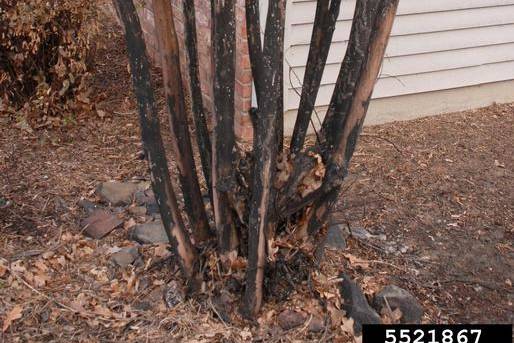
White crust or black mold on crape myrtles
That white, waxy crust is crape myrtle bark scale, and the black coating is the sooty mold that grows on what it leaves behind. It spreads fast from tree to tree and weakens blooms if it is left alone, but it responds well to treatment when caught early.
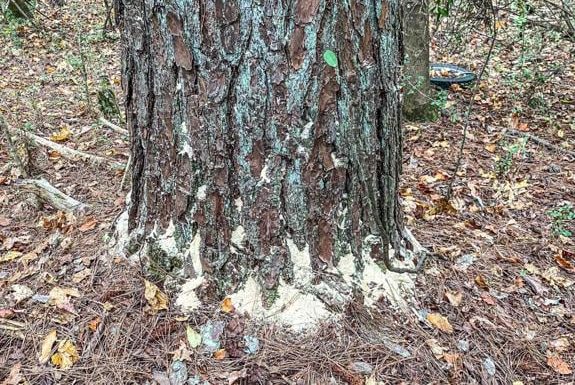
Holes, sawdust, or insects on the trunk
Small holes with fine sawdust or frass usually mean borers or beetles are already working inside the tree. These pests can feed for months before the canopy shows it, and once a pine fades it often cannot be saved, so early diagnosis is what protects the trees around it.
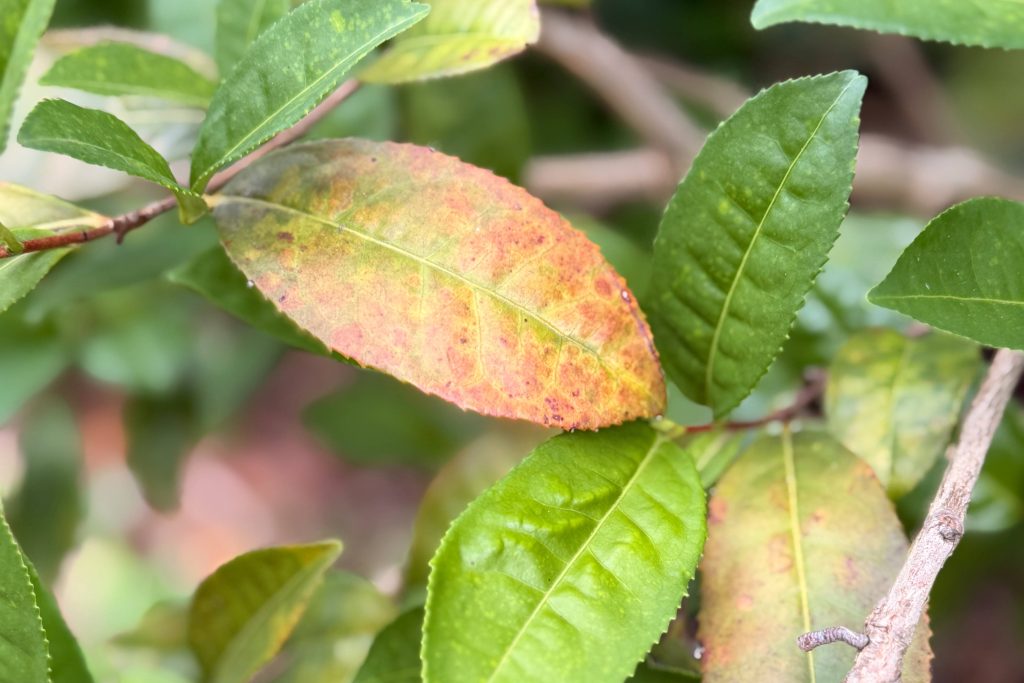
Yellowing leaves or thinning canopy
You just want a proactive plan
You do not have to wait for a problem to start. Preventive plant health care catches issues before they show and costs a fraction of reactive treatment or removal, which is why many homeowners put their trees on an annual program.
Why CSRA homeowners choose Arborwright

Diagnostic-first tree care
Most tree services start with “what do you want us to do?” We start with “what’s actually going on?” Arborwright is built around plant health care and diagnostic-first work, which means we look at your tree, identify what’s wrong, and tell you honestly what it needs. Sometimes that means treatment. Sometimes it means a pruning plan. Sometimes it means removal. We tell you which, with the evidence to back it up.
Our arborists know the CSRA’s soils, humid subtropical climate, and the tree species that thrive and struggle here. Local conditions matter. We show up prepared for them.
Science-based diagnostics
Every recommendation backed by plant pathology, soil science, and real evidence.
Honest recommendations
We tell you what your tree actually needs, even when it's less work for us.
The people behind Arborwright
Real credentials. Real expertise. Real local knowledge.
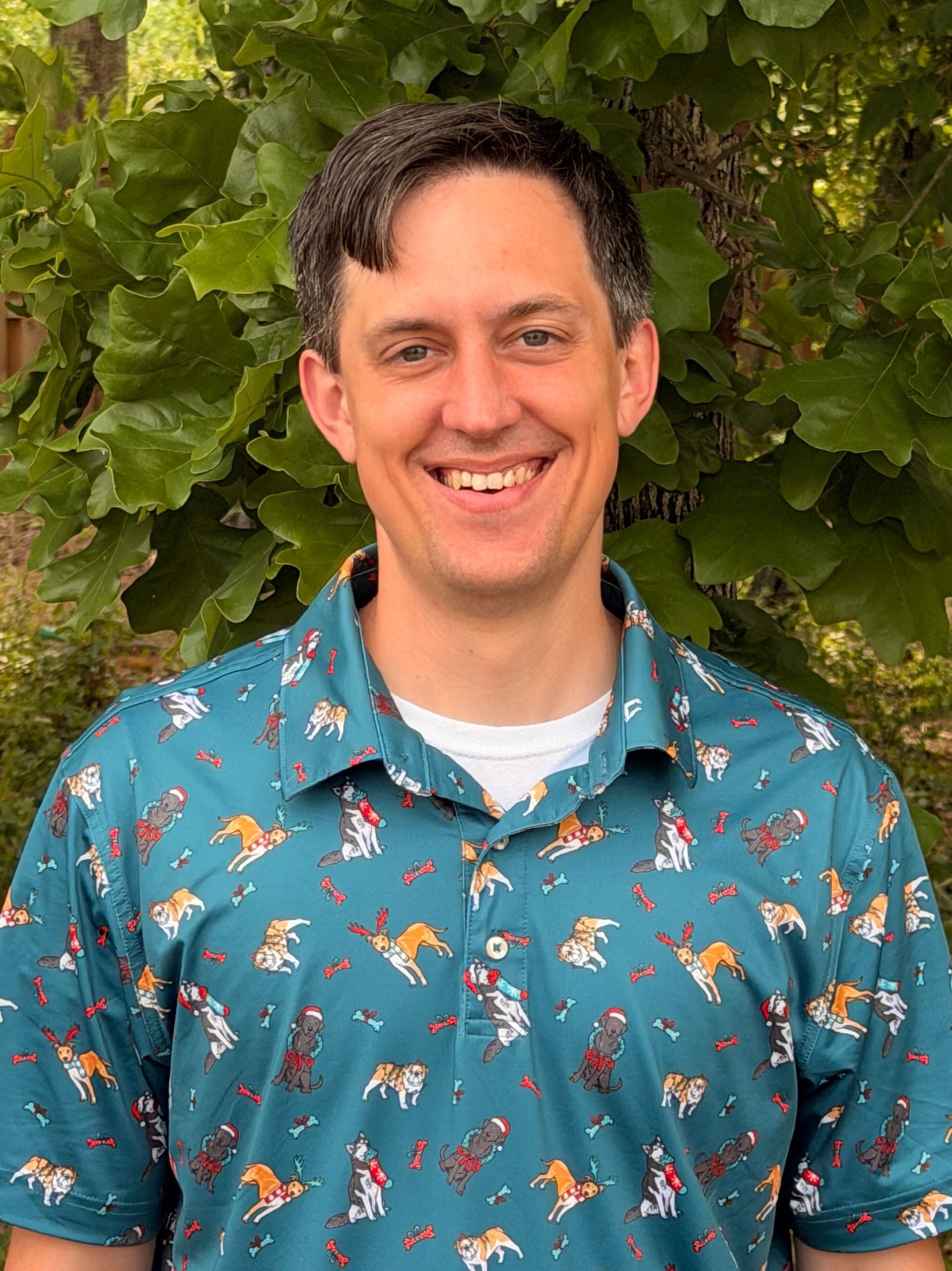
Burns Newsome
Founder & Plant Health Care Specialist
Licensed Applicator | B.S. Biology + M.S. Genetics | Former Vanderbilt Research Team
I come from a research background. Before founding Arborwright Tree Care, I spent several years as part of a research team at Vanderbilt University Medical Center, where careful observation and methodical thinking defined the job. I hold two degrees in the biological sciences, and I apply that same research-first mindset to every tree I evaluate.
What drives my work is a deep passion for healthy ecological landscapes. I believe most struggling trees can be saved when the right diagnosis comes first. Removal is a last resort, not a default. Across North Augusta, Aiken, Augusta, and the rest of the CSRA, I help homeowners understand what’s actually happening with their trees, from crape myrtle bark scale to root stress to storm damage, and build treatment plans backed by evidence instead of guesswork.
When I’m not in the field, I’m on my own land with my two boys: catching critters, fishing, and managing the property to support the greatest diversity of life it can hold. That’s how this business started. At some point, working within the constraints of my own backyard wasn’t enough. I wanted to care for the landscape around me in a meaningful way, and help the people in my community do the same. Arborwright is how I do that.
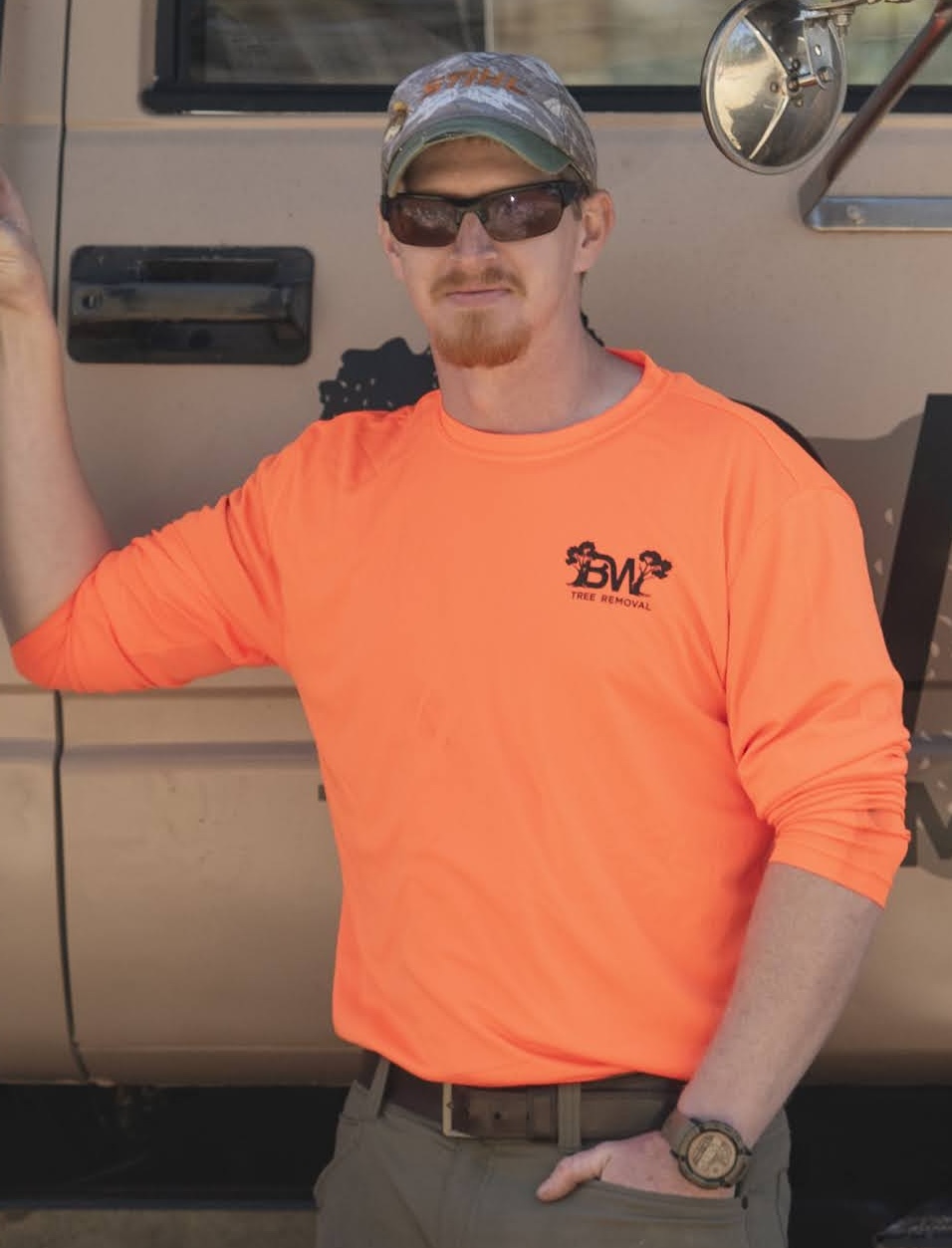
Thomas Wilson
ISA Certified Arborist®
ISA Certified Arborist® | ISA Member | 13 Years of Field Experience
I came up in tree work in Tennessee, where I spent years climbing, pruning, and learning how trees actually behave under load and stress. There is no shortcut for that kind of time in the canopy. When I moved to the CSRA, I brought that hands-on foundation with me and adapted it to a new set of species, the region’s soils, and a much longer growing season.
Earning my ISA Certified Arborist® credential held that field experience to a documented, tested standard. My focus is structure and risk: how a tree is built, where it is weak, and what it is likely to do in the next storm. I would rather find a failure point on a calm afternoon than after a limb is already down on someone’s roof.
What I value most is the work that keeps a mature tree standing. A large, established tree takes decades to replace, and most of the ones I assess can be kept healthy and sound when someone reads them early and acts on what they find. That is the part of this job I care about, and it is why I am glad to do it here in the CSRA.
Frequently asked questions
Everything homeowners ask before scheduling Crape Myrtle Bark Scale treatment.
Plant health care is the practice of keeping trees and shrubs healthy through regular diagnosis, treatment, and prevention, instead of only reacting when something goes wrong. It covers everything from soil testing and fertilization to insect, disease, and pest treatment, all aimed at keeping your trees alive and standing.
A regular tree service focuses on physical work like trimming and removal. Plant health care focuses on the biology of the tree, diagnosing and treating pests, diseases, and root problems so the tree stays healthy. Arborwright does both, but our plant health care division is led by a specialist with degrees in the biological sciences.
Often yes. Many tree problems in the Augusta area and across the CSRA, from bark scale to root decline to early pine beetle activity, are well underway before they are visible. A yearly assessment catches these early, when treatment is simpler and far cheaper than removing and replacing a tree that was quietly dying.
For a healthy, high-value tree, almost always. Removing and replacing a mature tree can cost thousands and takes decades to grow back. Ongoing care is a fraction of that and protects the shade, privacy, and property value a large tree provides. We also tell you honestly when a tree is not worth saving.
It depends on the tree and the problem. Some issues need a single treatment. Others, like scale or a nutrient deficiency, are managed with treatments once or twice a year. Many clients move to an annual program so their trees are checked and treated on a schedule instead of only in an emergency.
Yes. Boxwoods, azaleas, camellias, hollies, and other landscape shrubs get many of the same diseases and pests as trees, and we treat them too. Shrub disease and pest treatment is one of our core plant health care services.
Our plant health care work is led by Burns Newsome, a Licensed Applicator with a B.S. in Biology and an M.S. in Genetics. Treatments are carried out by trained, licensed applicators, so the products are handled correctly and applied at the right time and rate.
Trusted by homeowners across the CSRA
Real reviews from real customers across North Augusta, Augusta, Aiken, and the CSRA. Want to be one of them? Schedule your free inspection.
Plant health care across the CSRA
We provide plant health care throughout the CSRA. If you are not sure whether you are in our area, ask and we will tell you.
North Augusta, SC
Hammond’s Ferry, Riverview Park, downtown North Augusta. Our home base.
Augusta, GA
West Augusta, Summerville, National Hills, Forest Hills, downtown.
Aiken, SC
Downtown Aiken, Houndslake, Woodside, Hitchcock Woods area.
Evans, GA
Riverwood Plantation, Evans to Locks, Kiokee.
Photo Credits
Soil injection treatment — Mengmeng Gu, Texas A&M AgriLife Extension Service, Bugwood.org.
White, waxy bark spots in branch crotches; black sooty mold on trunk; reddish-pink crush test — Jim Robbins, University of Arkansas Cooperative Extension Service, Bugwood.org.
Reddish-pink crush test Photo by Celeste Ray, iNaturalist, CC BY-NC 4.0