Plant Health Care Specialists
Tree Cabling & Bracing in North Augusta, Augusta, and Aiken
A split fork, a tight V-shaped union, or a heavy limb you would rather support than lose? Arborwright installs cables and braces to the ANSI A300 standard, taking the load off a weak point so a tree worth keeping can stay standing. Free on-site assessment across North Augusta, Augusta, Aiken, and the rest of the CSRA.
- Biology Degreed Team
- Tree Cabling and Bracing
- Tree Support Systems
Get your FREE
Tree Inspection
We’ll call you within one business day to schedule your free on-site inspection. No obligation, no hard sell, no upsells you don’t need.
By submitting, you agree we may contact you by phone, text, or email about your request. Msg/data rates may apply. Reply STOP to unsubscribe. See our Privacy Policy.

What is tree cabling and bracing?
Tree cabling and bracing are structural support systems that reduce the chance of a tree failing at a weak point, using flexible cables high in the canopy and rigid rods through a weak union or split. Installed to the ANSI A300 support systems standard, they take stress off a defect so a structurally valuable tree can be kept rather than removed. Arborwright provides tree cabling, bracing, and guying across North Augusta, Augusta, Aiken, and the CSRA.
When does a tree need cabling or bracing?
Support makes sense when a tree has a structural weakness but is otherwise worth keeping, and reducing the load buys it years it would not have otherwise. On CSRA properties this comes up most with large water oaks and willow oaks that grew two competing trunks, and with heavy lateral limbs over the house.
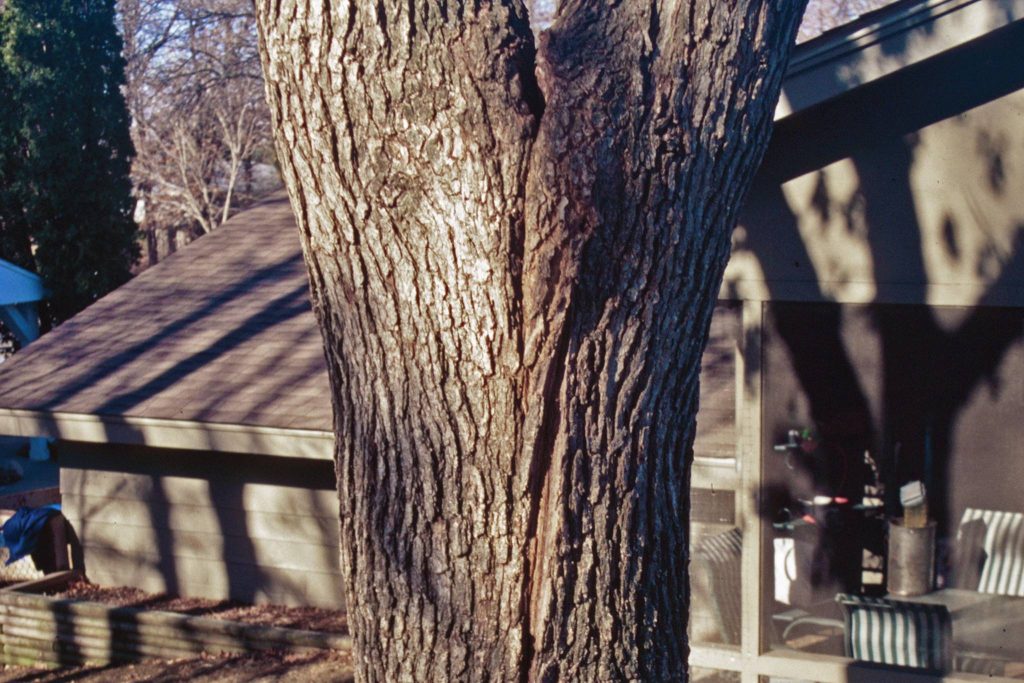
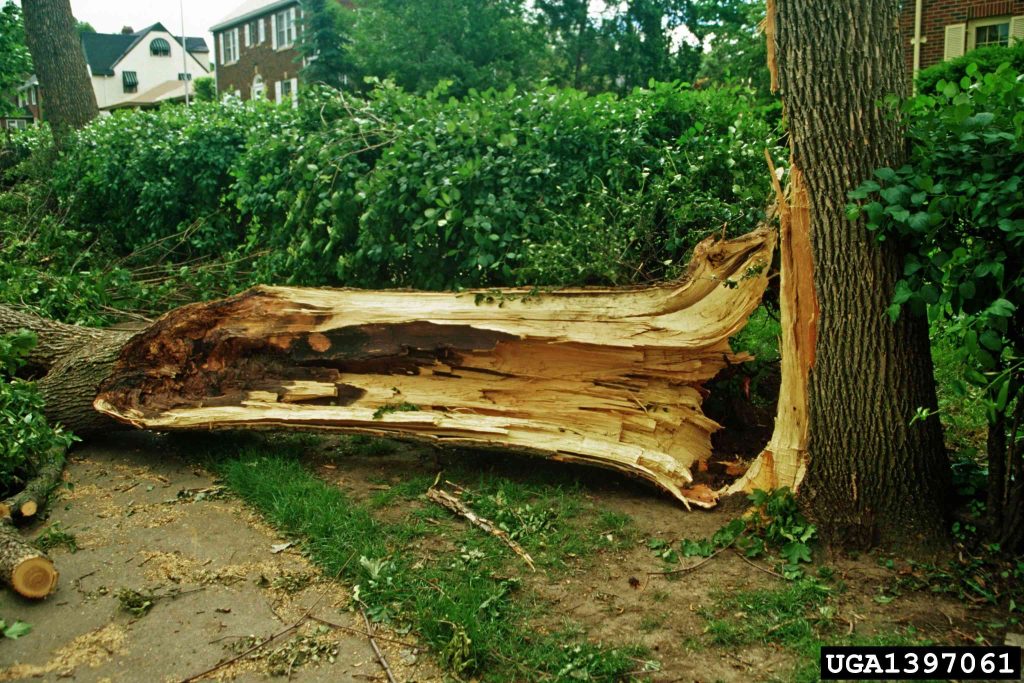
- Two trunks forming a tight V-shaped union
- A crack or split starting at a fork
- Included bark between competing stems
- A long, heavy limb over the house
- A tree splitting down the middle
- A young or leaning tree needing guying
Not sure if your tree can be saved with support? Send us a photo for free input within 24 hours.
Why do the biggest, fullest trees split right down the middle?
The trees that split in a storm usually did not develop a flaw, they grew one. When a tree forms two trunks of roughly equal size, the bark can get pinched between them instead of knitting together, a defect called included bark. That seam is a weak point with no real wood holding it, and as the two stems get heavier and catch more wind, the union pries itself apart. By the time it splits, the tree has often been failing slowly for years.
A support system changes the mechanics of that weak point. A flexible cable installed high in the canopy limits how far the two stems can move apart in wind, sharing the load between them instead of letting one lever against the other. A brace, a rigid rod set through the union itself, holds a split or a weak fork together directly. Often the two work as a system, with a brace at the union and a cable above it, sometimes paired with reduction pruning to take weight off the defect.
Support is not a guarantee, and a cable installed wrong is worse than none, because it gives false security on a tree that should have come down. The hardware has to be the right size and set at the right height and tension, to the ANSI A300 support systems standard, and it has to be inspected over time because cables and the wood around them change. Tthe first call we make is the honest one: is this tree sound enough to support, or is it past saving? Support is for trees worth keeping, not for propping up a tree that needs to come down.
How does Arborwright install tree support systems?
Step 01 · Assess the tree
Before any hardware goes in, We assesses whether the tree is sound enough to support and worth keeping. A cable on a tree that should be removed is a false sense of safety, so the honest call comes first.
Step 02 · Design the system
We design the support to the defect, a cable high in the canopy to limit movement, a brace through a weak or splitting union, or a guy system for a leaning tree. Placement, height, and hardware size are matched to the tree and the load it carries.
Step 03 · Install to standard
Hardware is installed to the ANSI A300 support systems standard, using the right components set at the correct height and tension. Where it helps, we pair the system with reduction pruning to take weight off the weak point rather than relying on the cable alone.
Step 04 · Inspect and maintain
A support system is not install-and-forget. We set an inspection schedule, because cables, hardware, and the wood around them change over the years, and a system that is not checked can fail when it is needed most.
What to expect from your tree support system
DAY 0
Assessment
We assesses whether the tree is sound enough to support and worth keeping, and designs the system.

BEFORE INSTALL
DESIGN
We design the support to the defect, a cable high in the canopy, a brace through a weak union, or a guy system, sized to the tree and its load.
INSTALL DAY
Installation
Cables, braces, or guys go in to the ANSI A300 standard, often in a single visit, with reduction pruning where it helps.
EVERY 1 TO 2 YEARS
Inspection
We re-inspect the hardware and the wood around it, adjust tension if needed, and confirm the system is still doing its job.
What support buys you
A structurally weak tree that would otherwise be a hazard or a removal becomes a tree you can keep, often for many more years. Cabling and bracing reduce the risk of failure at the weak point, but they do not make a tree invincible, which is why the inspection schedule matters as much as the install.
Why CSRA homeowners choose Arborwright

Diagnostic-first tree care
Most tree services start with “what do you want us to do?” We start with “what’s actually going on?” Arborwright is built around plant health care and diagnostic-first work, which means we look at your tree, identify what’s wrong, and tell you honestly what it needs. Sometimes that means treatment. Sometimes it means a pruning plan. Sometimes it means removal. We tell you which, with the evidence to back it up.
Our arborists know the CSRA’s soils, humid subtropical climate, and the tree species that thrive and struggle here. Local conditions matter. We show up prepared for them.
Science-based diagnostics
Every recommendation backed by plant pathology, soil science, and real evidence.
Honest recommendations
We tell you what your tree actually needs, even when it's less work for us.
The people behind arborwright
Real credentials. Real expertise. Real local knowledge.
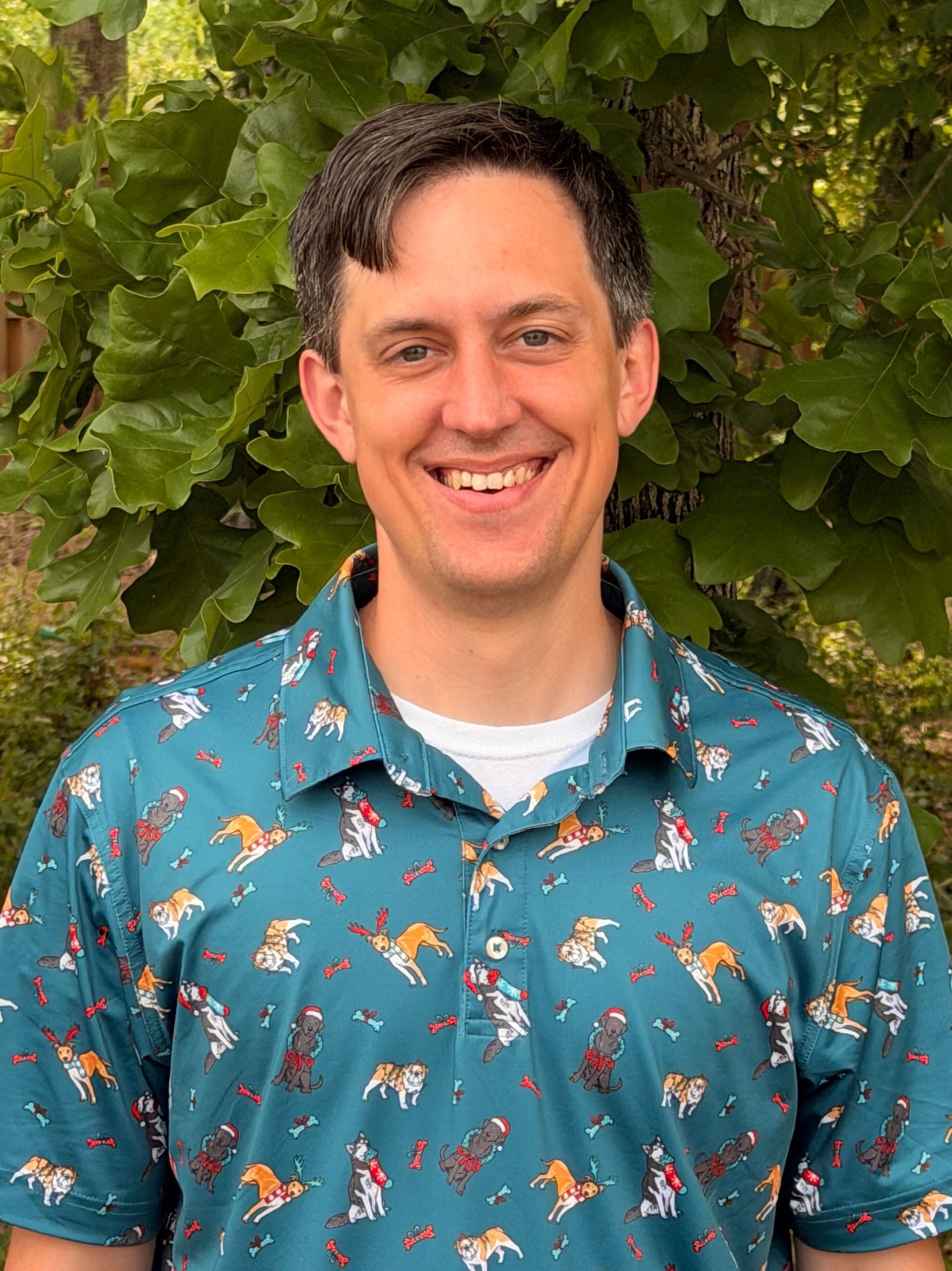
Burns Newsome
Founder & Plant Health Care Specialist
Licensed Applicator | B.S. Biology + M.S. Genetics | Former Vanderbilt Research Team
I come from a research background. Before founding Arborwright Tree Care, I spent several years as part of a research team at Vanderbilt University Medical Center, where careful observation and methodical thinking defined the job. I hold two degrees in the biological sciences, and I apply that same research-first mindset to every tree I evaluate.
What drives my work is a deep passion for healthy ecological landscapes. I believe most struggling trees can be saved when the right diagnosis comes first. Removal is a last resort, not a default. Across North Augusta, Aiken, Augusta, and the rest of the CSRA, I help homeowners understand what’s actually happening with their trees, from crape myrtle bark scale to root stress to storm damage, and build treatment plans backed by evidence instead of guesswork.
When I’m not in the field, I’m on my own land with my two boys: catching critters, fishing, and managing the property to support the greatest diversity of life it can hold. That’s how this business started. At some point, working within the constraints of my own backyard wasn’t enough. I wanted to care for the landscape around me in a meaningful way, and help the people in my community do the same. Arborwright is how I do that.
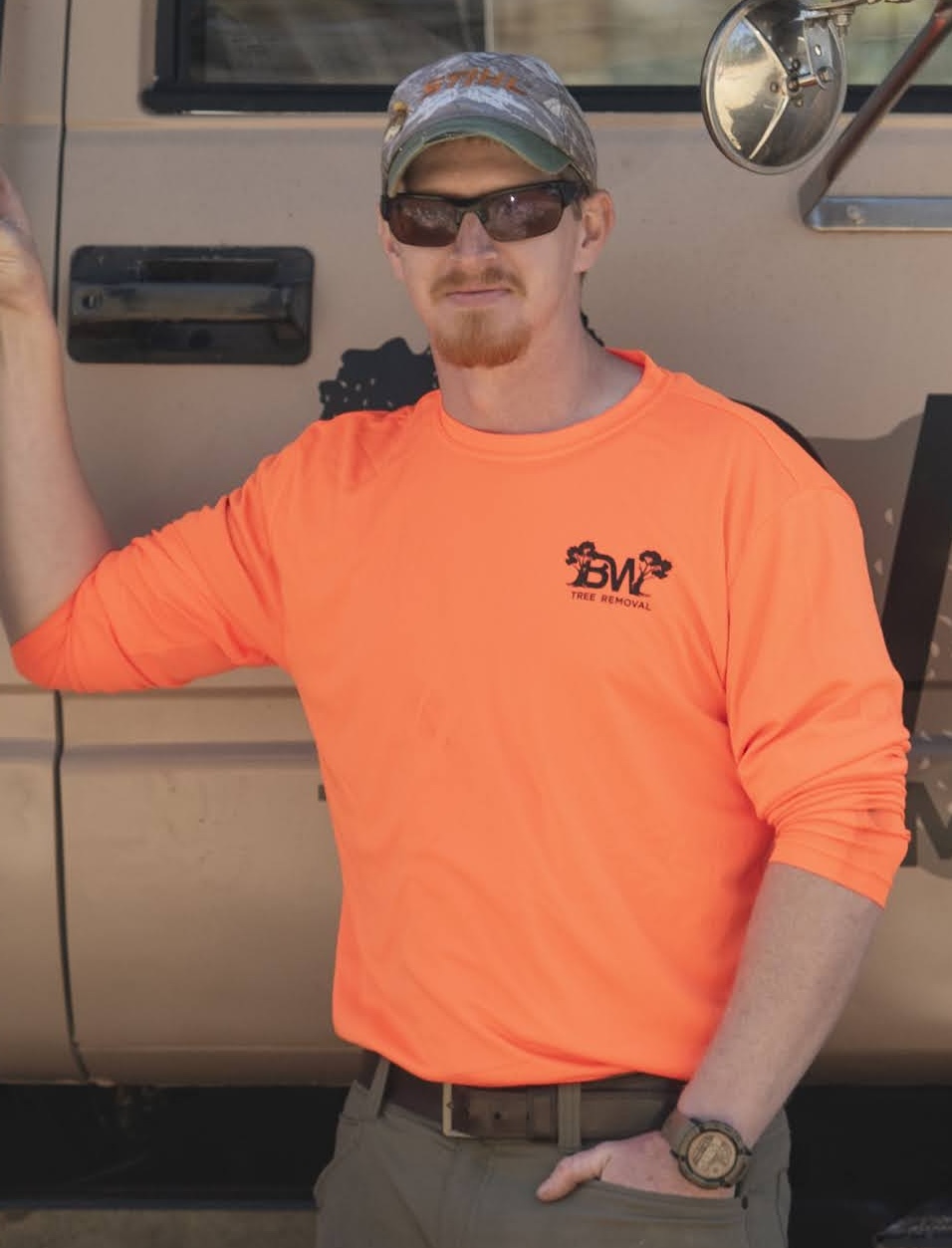
Thomas Wilson
ISA Certified Arborist®
ISA Certified Arborist® | ISA Member | 13 Years of Field Experience
I came up in tree work in Tennessee, where I spent years climbing, pruning, and learning how trees actually behave under load and stress. There is no shortcut for that kind of time in the canopy. When I moved to the CSRA, I brought that hands-on foundation with me and adapted it to a new set of species, the region’s soils, and a much longer growing season.
Earning my ISA Certified Arborist® credential held that field experience to a documented, tested standard. My focus is structure and risk: how a tree is built, where it is weak, and what it is likely to do in the next storm. I would rather find a failure point on a calm afternoon than after a limb is already down on someone’s roof.
What I value most is the work that keeps a mature tree standing. A large, established tree takes decades to replace, and most of the ones I assess can be kept healthy and sound when someone reads them early and acts on what they find. That is the part of this job I care about, and it is why I am glad to do it here in the CSRA.
Tree cabling and bracing pricing
The on-site assessment is free. Cabling and bracing are typically priced per system depending on the factors below.
- Tree size and height
- Type of system needed
- Number of cables or braces
- Canopy access and rigging
- Reduction pruning, if paired
- Single tree or several
Free assessment includes
Your free assessment includes an honest call on whether the tree can be saved with support, a recommended system designed to the defect, and itemized pricing. We walk you through it on site, with no obligation and no pressure.
Frequently asked questions
Everything homeowners ask before scheduling tree cabling and bracing.
The on-site assessment is free, and cabling is usually priced per system. Cost depends on the tree’s size and height, the type and number of cables or braces, and the canopy access required. Arborwright assesses whether the tree is worth supporting first, so you are not paying to cable a tree that should come down instead.
Cabling uses flexible steel cables installed high in the canopy to limit how far two stems can move apart in wind. Bracing uses rigid rods set through a weak or splitting union to hold it together directly. Many trees get both, a brace at the union and a cable above it, and guying anchors a leaning or young tree to the ground.
On a tree that is structurally sound except for one weak point, yes, a support system can reduce the risk of failure for many years. It is not a cure for a tree that is decayed or dying, and it does not make any tree storm-proof. The honest assessment of whether the tree is worth saving comes before any hardware goes in.
An arborist confirms the tree is sound enough to support, designs the system to the defect, and installs cables, braces, or guys to the ANSI A300 support systems standard at the correct height and tension. Where it helps, reduction pruning is paired in to take weight off the weak point. Most systems go in within a single visit.
Installed correctly, the small amount of wounding from proper hardware is far less risk than the failure it prevents, and the tree compartmentalizes around it. The harm comes from doing it wrong, undersized hardware, a bolt through living wood with no plan, or a hardware-store strap, which can girdle or weaken the tree and fail under load.
Some companies will cable any tree, and others push removal because it is the bigger job. Arborwright makes the honest call first: support a tree worth keeping, or recommend removal when it is genuinely past saving. We have with years of experience reading tree structure, and every system is installed to the ANSI A300 standard.
A properly installed cable system can last many years, but it is not permanent and not install-and-forget. Cables, hardware, and the wood they attach to change over time, so the system needs inspection every year or two and occasional adjustment. A cable nobody has checked in a decade can fail in the storm it was meant to handle.
It depends on whether the tree is sound apart from the weak point and whether it is worth keeping. A healthy, valuable tree with a single structural defect is often a good candidate for support. A tree that is decayed, declining, or carrying multiple serious defects is usually better removed. An honest assessment is what tells the two apart.
It is strongly discouraged. Straightening kits and a bolt through the trunk do not match the load a mature tree puts on a weak union, and improper hardware can girdle the tree, wound it, or fail without warning, giving a false sense of safety. Professional cabling uses engineered hardware sized and placed to the ANSI A300 standard.
Being present for the assessment helps so the plan is clear, but the installation itself does not require you to be home if access to the tree is arranged in advance. The work is done up in the canopy and at the union, and leaves little on the ground beyond pruning debris, which is hauled away before the crew leaves.
Trusted by homeowners across the CSRA
Real reviews from real customers across North Augusta, Augusta, Aiken, and the CSRA. Want to be one of them? Schedule your free inspection.
Tree cabling and bracing near you
Arborwright Tree Care provides plant health care, tree services, and arborist consultations across North Augusta, Augusta, Aiken, Evans, Martinez, and the surrounding CSRA. Find your area below.
North Augusta, SC
Hammond’s Ferry, Riverview Park, downtown North Augusta. Our home base.
Augusta, GA
West Augusta, Summerville, National Hills, Forest Hills, downtown.
Aiken, SC
Downtown Aiken, Houndslake, Woodside, Hitchcock Woods area.
Evans, GA
Riverwood Plantation, Evans to Locks, Kiokee.
Photo Credits
Joseph O’Brien, USDA Forest Service, Bugwood.org