Plant Health Care Specialists
Tree Risk Assessment in North Augusta, Augusta, and Aiken
A tree leaning toward the house, big limbs over the roof, or one you just do not trust in a storm? Arborwright assesses how likely a tree is to fail and what it would hit, then tells you the least drastic way to make it safe, not just whether to cut it down. Free on-site assessment across North Augusta, Augusta, Aiken, and the rest of the CSRA.
- Biology Degreed Team
- Tree risk assessment
- Hazardous tree inspection
Get your FREE
Tree Inspection
We’ll call you within one business day to schedule your free on-site inspection. No obligation, no hard sell, no upsells you don’t need.
By submitting, you agree we may contact you by phone, text, or email about your request. Msg/data rates may apply. Reply STOP to unsubscribe. See our Privacy Policy.

What is a tree risk assessment?
A tree risk assessment is an arborist’s evaluation of how likely a tree is to fail and what it would damage if it did, used to rate the actual risk and recommend the right response. Rather than guessing, it weighs the tree’s defects against what stands within reach, following the ANSI A300 standard for tree risk assessment. Arborwright provides tree risk assessments across North Augusta, Augusta, Aiken, and the CSRA.
How do I know if my tree is dangerous?
You are in the right place if a tree is leaning, dropping limbs, cracked, or standing close enough to the house to worry you. On CSRA properties the biggest risks tend to be large water oaks, willow oaks, and pines weakened by storms, decay, or saturated clay soil.
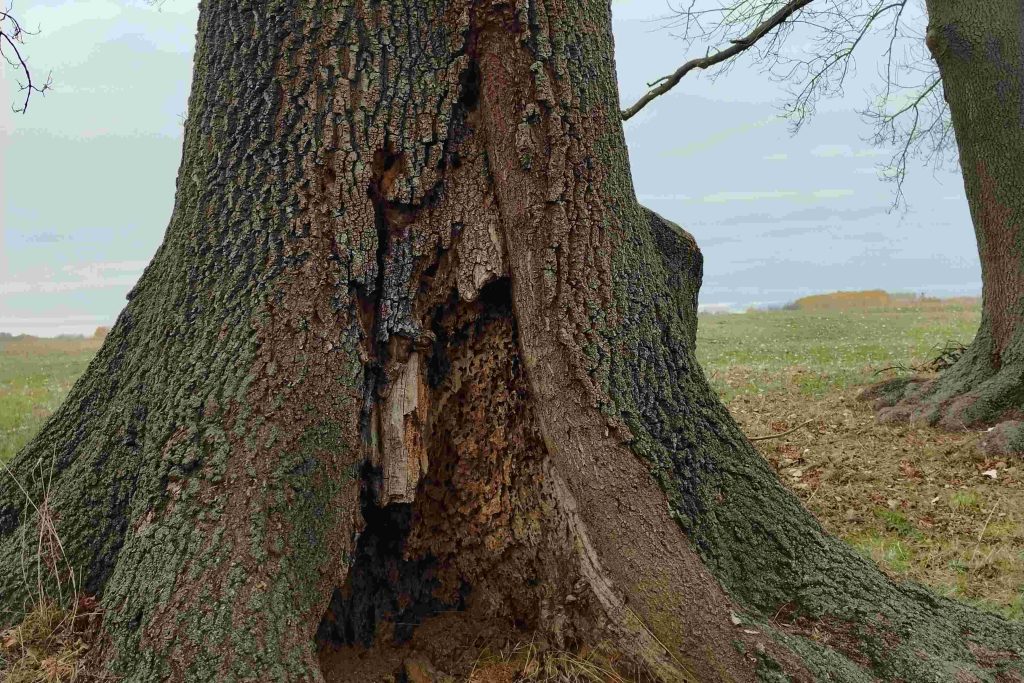
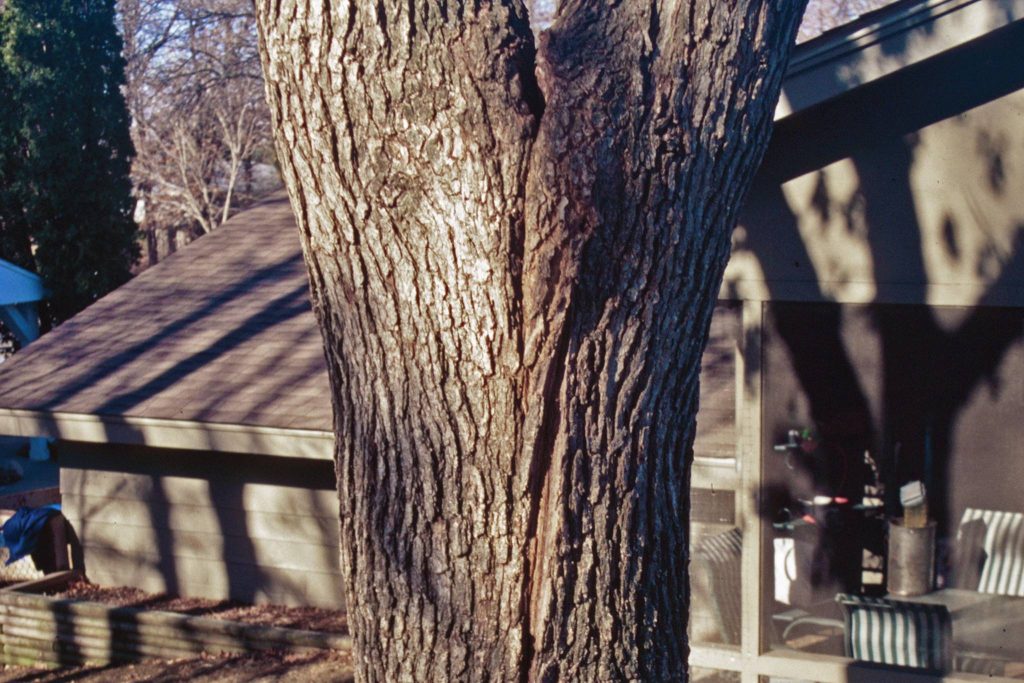
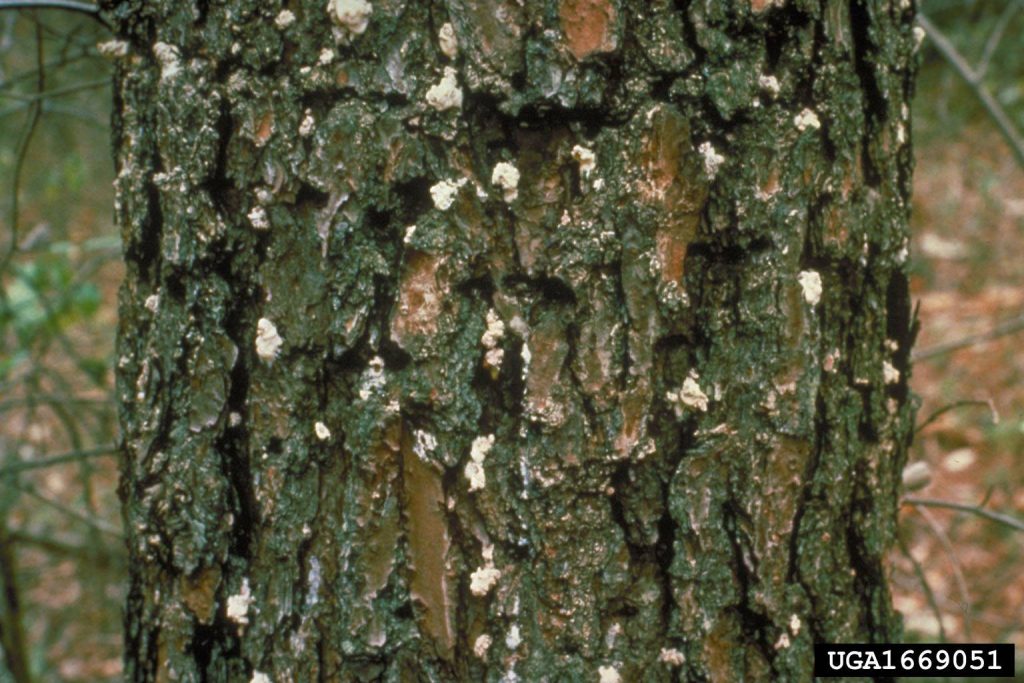
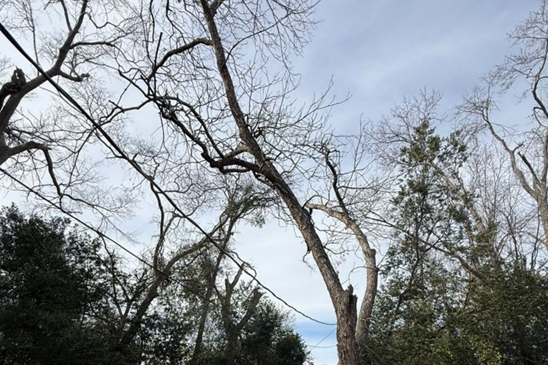
- A new or worsening lean
- Large dead limbs over the house
- Cracks or splits in the trunk
- Mushrooms or decay at the base
- Heaving soil or exposed roots
- Big limbs hanging after a storm
Worried about a tree but not sure? Send us a photo for free input within 24 hours.
Why is the most dangerous tree often not the one that looks worst?
Homeowners usually worry about the tree that looks rough, the one with dead branches or thin leaves. But the tree that fails in a storm is often the big, full, healthy-looking one with a defect you cannot see from the ground. A tree health assessment asks whether a tree is sick; a risk assessment asks whether it is going to fall, and the two answers are not the same. Decay can hollow a sound-looking trunk, roots rot below the soil, and a tight fork between two stems can be splitting long before anything shows.
A real assessment does not just ask whether a tree could fail, it asks how likely that is and what would happen if it did. An arborist reads the structural defects, the lean, the root condition, and the load the tree carries, then weighs that against what stands within striking distance, a house, a driveway, a play set, or open lawn. A cracked tree over a shed is a very different risk than the same tree over a bedroom. That likelihood-and-consequence framework, set out in the ANSI A300 standard for tree risk assessment, turns a gut feeling into a rating you can act on.
Reading that correctly takes time in the canopy, not a glance from the truck. Arborwright has years spent on exactly this, how a tree is built, where it is weak, and what it is likely to do in the next storm. A finding of risk does not automatically mean removal. Many hazards are fixed by pruning out the weak limbs, cabling a split fork, or simply monitoring a tree that is sound enough to watch, so the assessment ends with the least drastic option that actually makes the tree safe.
How does Arborwright assess tree risk?
Step 01 · Inspect the whole tree
Arborwright examines the tree from the roots up: the root flare and soil for stability, the trunk for cracks and decay, and the canopy for deadwood, weak unions, and storm damage. The inspection is hands-on, not a glance from the driveway.
Step 02 · Find the defects
We identify the structural defects that actually drive failure, a hollow or decayed trunk, codominant stems with included bark, a developing lean, or root loss. Some are visible, and some are read from subtler signs the way a doctor reads a chart.
Step 03 · Rate the risk
Each defect is weighed for how likely it is to fail and what it would hit, following the ANSI A300 standard for tree risk assessment. A defect over open lawn and the same defect over a bedroom are rated very differently, because the target is half the equation.
Step 04 · Recommend the fix
You get a clear rating and the least drastic option that makes the tree safe, whether that is pruning out the hazard, structural support like cabling, ongoing monitoring, or removal when it is genuinely the only safe choice.
What to expect from your tree risk assessment
DAY 0
Book the visit
We schedule the assessment around your concern and how urgent the tree looks.

DAY 1 TO 5
On-site assessment
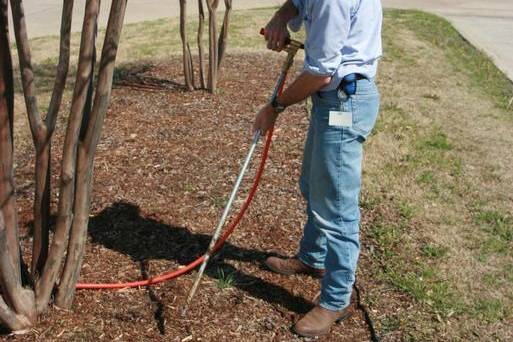
Tom inspects the tree hands-on, usually within a few days, sooner if it looks like an immediate hazard.
SAME VISIT
Rating and recommendations
You get the risk rating and the recommended response in plain language before we leave.
ONGOING
Mitigation or monitoring
We carry out the pruning or support work, or set a monitoring schedule for a tree that is sound enough to watch.
What you receive
A clear read on whether the tree is a hazard, a risk rating you can act on, and the least drastic recommendation that makes it safe. If you need the findings in writing for insurance, an HOA, or a sale, a documented report is available through our arborist consultation.
Why CSRA homeowners choose Arborwright

Diagnostic-first tree care
Most tree services start with “what do you want us to do?” We start with “what’s actually going on?” Arborwright is built around plant health care and diagnostic-first work, which means we look at your tree, identify what’s wrong, and tell you honestly what it needs. Sometimes that means treatment. Sometimes it means a pruning plan. Sometimes it means removal. We tell you which, with the evidence to back it up.
Our arborists know the CSRA’s soils, humid subtropical climate, and the tree species that thrive and struggle here. Local conditions matter. We show up prepared for them.
Science-based diagnostics
Every recommendation backed by plant pathology, soil science, and real evidence.
Honest recommendations
We tell you what your tree actually needs, even when it's less work for us.
The people behind arborwright
Real credentials. Real expertise. Real local knowledge.

Burns Newsome
Founder & Plant Health Care Specialist
Licensed Applicator | B.S. Biology + M.S. Genetics | Former Vanderbilt Research Team
I come from a research background. Before founding Arborwright Tree Care, I spent several years as part of a research team at Vanderbilt University Medical Center, where careful observation and methodical thinking defined the job. I hold two degrees in the biological sciences, and I apply that same research-first mindset to every tree I evaluate.
What drives my work is a deep passion for healthy ecological landscapes. I believe most struggling trees can be saved when the right diagnosis comes first. Removal is a last resort, not a default. Across North Augusta, Aiken, Augusta, and the rest of the CSRA, I help homeowners understand what’s actually happening with their trees, from crape myrtle bark scale to root stress to storm damage, and build treatment plans backed by evidence instead of guesswork.
When I’m not in the field, I’m on my own land with my two boys: catching critters, fishing, and managing the property to support the greatest diversity of life it can hold. That’s how this business started. At some point, working within the constraints of my own backyard wasn’t enough. I wanted to care for the landscape around me in a meaningful way, and help the people in my community do the same. Arborwright is how I do that.
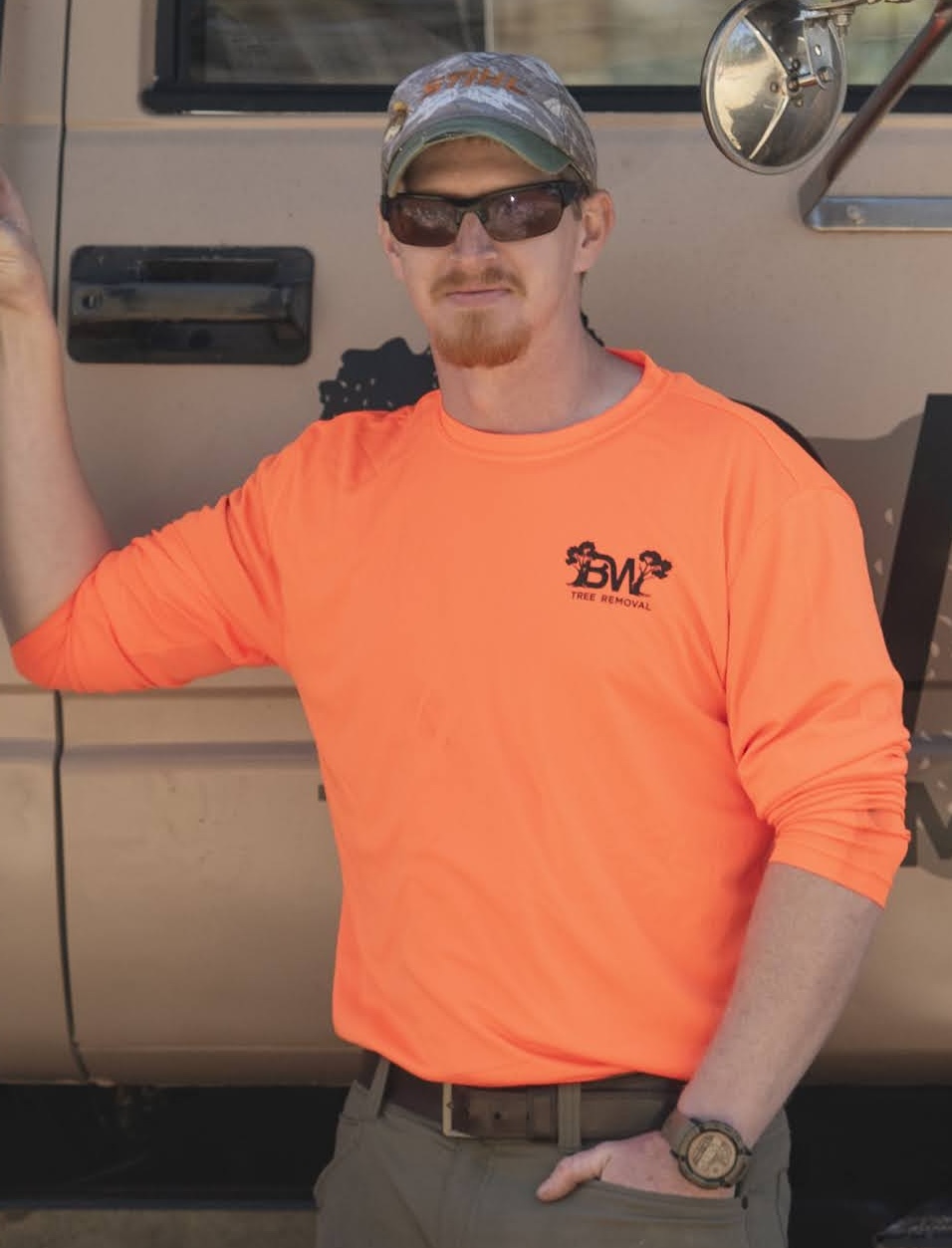
Thomas Wilson
ISA Certified Arborist®
ISA Certified Arborist® | ISA Member | 13 Years of Field Experience
I came up in tree work in Tennessee, where I spent years climbing, pruning, and learning how trees actually behave under load and stress. There is no shortcut for that kind of time in the canopy. When I moved to the CSRA, I brought that hands-on foundation with me and adapted it to a new set of species, the region’s soils, and a much longer growing season.
Earning my ISA Certified Arborist® credential held that field experience to a documented, tested standard. My focus is structure and risk: how a tree is built, where it is weak, and what it is likely to do in the next storm. I would rather find a failure point on a calm afternoon than after a limb is already down on someone’s roof.
What I value most is the work that keeps a mature tree standing. A large, established tree takes decades to replace, and most of the ones I assess can be kept healthy and sound when someone reads them early and acts on what they find. That is the part of this job I care about, and it is why I am glad to do it here in the CSRA.
Tree risk assessment pricing
The on-site risk assessment is free. If mitigation is needed, the work is quoted from the findings and typically ranges depending on the factors below.
- Tree size and number of trees
- Severity of the defect
- Type of mitigation needed
- Property access and obstacles
- Pruning, support, or removal
- Written report, if requested
Free assessment includes
Your free assessment includes a hands-on inspection, a clear risk rating, and the least drastic recommendation that makes the tree safe, with itemized pricing for any work. Arborwright walks you through the findings on site, with no obligation and no pressure.
Frequently asked questions
Everything homeowners ask before scheduling a tree risk assessment.
The on-site risk assessment is free. If the tree needs work, the mitigation is quoted from the findings, and the cost depends on the tree’s size, the defect, and whether the fix is pruning, structural support, or removal. Arborwright rates the actual risk first and recommends the least drastic option, so you are not paying to remove a tree that can be saved.
Warning signs include a new or worsening lean, cracks or splits in the trunk, large dead limbs, mushrooms or decay at the base, and soil heaving near the roots. The catch is that the most dangerous defects, internal decay and root loss, often cannot be seen from the ground. A hands-on assessment is the reliable way to know.
Not always. A tree that has leaned the same way for years, with no soil heaving or root lifting, is often stable. A new lean, or one with cracked soil and exposed roots on the high side, is a serious warning sign of root or trunk failure. The difference is exactly what a risk assessment determines before anything drastic is done.
An arborist inspects the tree hands-on, from the root flare and soil up through the trunk and canopy, and identifies the structural defects that drive failure. Each is rated for how likely it is to fail and what it would hit. You receive a clear risk rating and the least drastic recommendation that makes the tree safe, on the same visit.
Often no. Many hazards are resolved by pruning out the weak or dead limbs, cabling a split fork to support it, or monitoring a tree that is sound enough to watch. Removal is the last resort, reserved for trees that are genuinely unsafe to keep. The point of the assessment is to find the least drastic fix that actually works.
Many companies inspect a tree and recommend removal, because removal is the biggest job. Arborwright rates the real risk and recommends the least drastic fix that makes the tree safe.
Yes, and before is far better than after. The CSRA’s storm and hurricane season puts heavy wind and saturated soil on trees already carrying defects, and the failures that hit homes are usually preventable. A pre-season assessment finds the weak limbs and unstable trees while there is still time to prune, support, or remove them on your schedule, not in an emergency.
Large trees within striking distance of the house are worth assessing every few years, and after any major storm. Trees with a known defect under watch should be checked on the schedule the arborist sets. A tree’s risk changes as it grows, decays, or takes storm damage, so a one-time clean bill of health does not last forever.
Yes. A verbal rating and recommendation come with every assessment, and a documented written report is available when you need one for insurance, an HOA, a permit, or a property sale. Written reports are handled through Arborwright’s arborist consultation, where the findings are recorded in a format reviewers will accept.
Being present helps so the findings and recommendations are clear, but it is not required if access to the tree is arranged in advance. Many CSRA homeowners point out the tree, leave access, and review the rating afterward. An assessment of one or a few trees usually takes under an hour on site.
Trusted by homeowners across the CSRA
Real reviews from real customers across North Augusta, Augusta, Aiken, and the CSRA. Want to be one of them? Schedule your free inspection.
Tree risk assessment near you
Arborwright Tree Care provides plant health care, tree services, and arborist consultations across North Augusta, Augusta, Aiken, Evans, Martinez, and the surrounding CSRA. Find your area below.
North Augusta, SC
Hammond’s Ferry, Riverview Park, downtown North Augusta. Our home base.
Augusta, GA
West Augusta, Summerville, National Hills, Forest Hills, downtown.
Aiken, SC
Downtown Aiken, Houndslake, Woodside, Hitchcock Woods area.
Evans, GA
Riverwood Plantation, Evans to Locks, Kiokee.
Photo Credits
Joseph O’Brien, USDA Forest Service, Bugwood.org