Plant Health Care Specialists
Soil Testing for Trees in North Augusta, Aiken, and the CSRA
Pouring fertilizer, lime, or amendments on a tree without knowing what the soil actually needs is guesswork, and guesswork is how trees get over-fed and money gets wasted. Arborwright tests the soil in your trees’ root zone and tells you exactly what it lacks and what to do about it, interpreted for your trees, not a generic crop. Serving North Augusta, Aiken, Augusta, Evans, Martinez, and the surrounding CSRA.
- Local Soil Experts
- Biology-Degreed Team
- Tree Soil Analysis
Get your FREE
Tree Inspection
We’ll call you within one business day to schedule your free on-site inspection. No obligation, no hard sell, no upsells you don’t need.
By submitting, you agree we may contact you by phone, text, or email about your request. Msg/data rates may apply. Reply STOP to unsubscribe. See our Privacy Policy.

What is tree soil testing?
Tree soil testing is the lab analysis of soil pulled from a tree’s root zone, measuring pH, nutrient levels, and texture, then interpreting those numbers into specific recommendations for that tree. The test is only half the value, the other half is reading the results for trees rather than crops or turf, so you treat the actual problem instead of guessing. Arborwright provides tree soil testing and recommendations across North Augusta, Aiken, and the CSRA, guided by the ANSI A300 soil management standard.
When should I test my tree's soil?
A soil test makes sense any time you are about to spend money on the soil, or when a tree is struggling and you do not know why. On CSRA properties, where soils range from the clay-heavy Piedmont to the sandy, low-organic soils of the Aiken Sandhills, testing turns guesswork into a plan. The problems are different depending on where you are, and so are the solutions.
- Before fertilizing or liming anything
- A tree declining for no clear reason
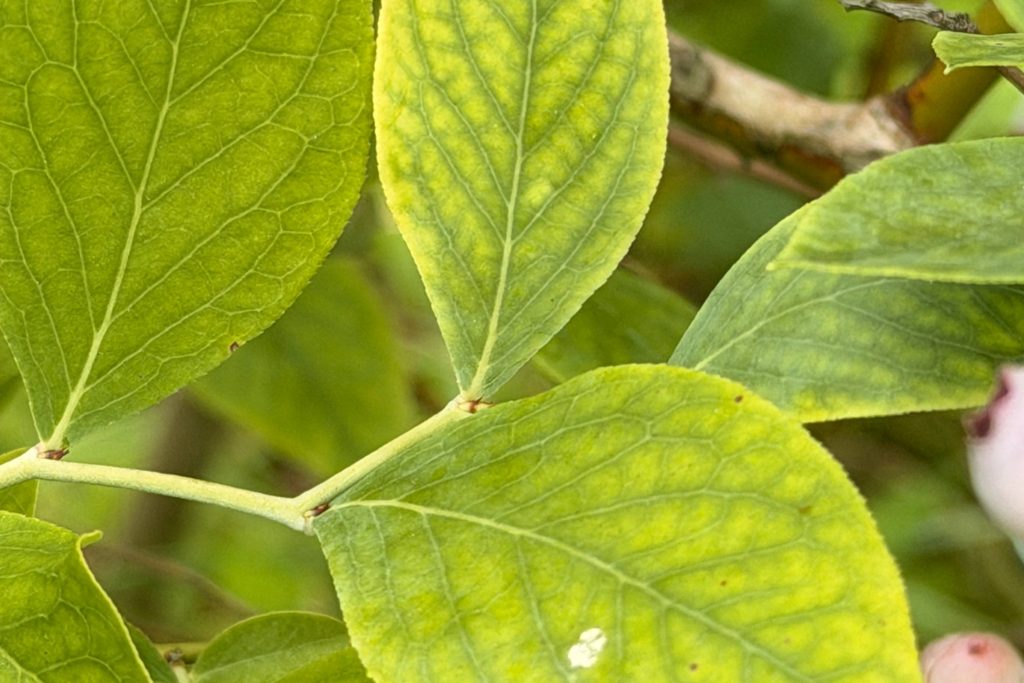
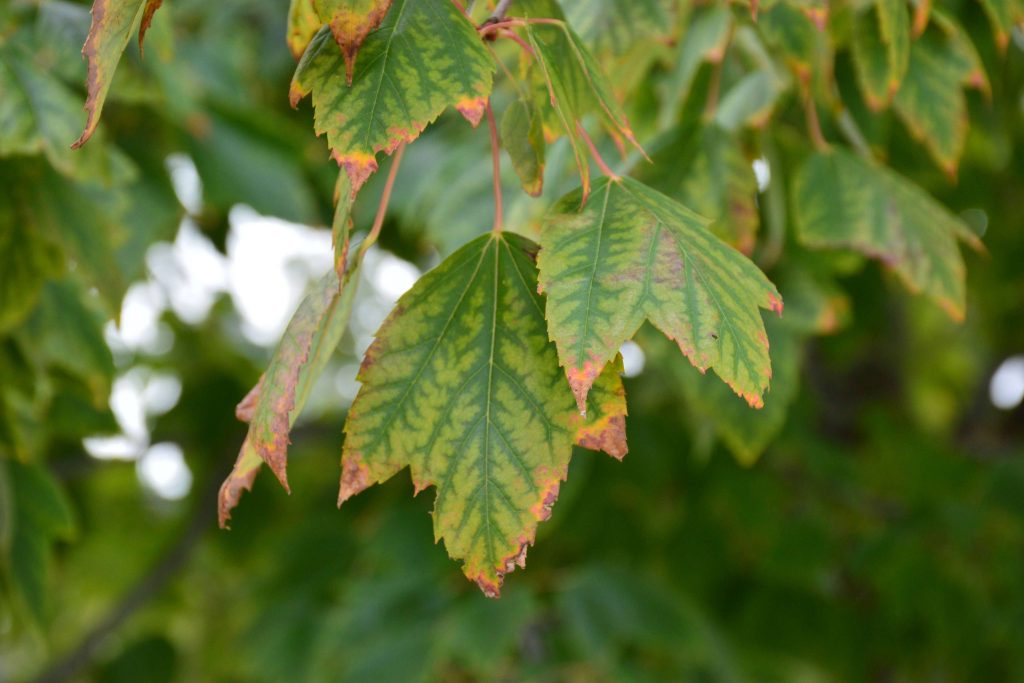
- Pale or off-color leaves
- Poor growth in newly planted trees
- Planning a tree care or feeding program
- Repeated problems in the same area
Not sure if your soil is the issue? Send us a photo of the tree for free input within 24 hours.
Why do most soil reports lead people to do the wrong thing?
You can mail a soil sample to a lab and get a page of numbers back for very little money, and most people then do exactly the wrong thing with it. The report is written for general use, so it recommends what a lawn or a crop wants, not what an oak or a pine needs, and the two are often opposite. People add nitrogen a tree did not need, or lime soil that was already fine, and end up stressing the very tree they were trying to help. The test is not the hard part, reading it for trees is.
A proper tree soil test pulls samples from where the feeder roots actually are and measures the things that move the needle: pH, which controls whether a tree can even take up the nutrients present, the levels of nitrogen, phosphorus, potassium, and micronutrients, and the texture and organic matter that determine how the soil holds water and air. In the CSRA, where soils range from compacted Piedmont clay to the sandy, low-organic soils of the Sandhills, the answer is often that pH or soil structure is locking up nutrients that are already there. That means more fertilizer would do nothing, and the real fix is something else entirely.
This is where a research background earns its keep. Burns Newsome came out of a Vanderbilt research team with two degrees in the biological sciences, and reading lab data to find the actual cause is exactly the work he was trained for. A soil test from Arborwright does not end with numbers, it ends with a plain recommendation: feed this, adjust the pH that much, relieve the compaction here, or do nothing because the soil is fine. The goal is to spend money only where the soil test says it will work.

How does Arborwright test tree soil?
Step 01 · Pull the right samples
We collect soil from where the tree's feeder roots actually are, at the right depth and from several points, because a sample taken from the wrong spot gives the wrong answer. The trees and their symptoms guide where we sample.
Step 02 · Run the lab analysis
The samples are analyzed for pH, nutrient levels, micronutrients, texture, and organic matter. This is objective lab data, not a field guess, which is what lets us separate a real deficiency from a problem that only looks like one.
Step 03 · Interpret for your trees
Burns reads the results against what your specific trees need, not a generic crop standard. The same numbers mean different things for an oak, a pine, or a crepe myrtle, and the interpretation is where the report becomes useful.
Step 04 · Deliver the plan
You get plain recommendations: what to add, what to adjust, what to leave alone, and what the soil is not the cause of. If feeding or amendments are warranted, the plan ties straight into deep root fertilization or soil work.
What to expect from a soil test
DAY 0
Sampling visit
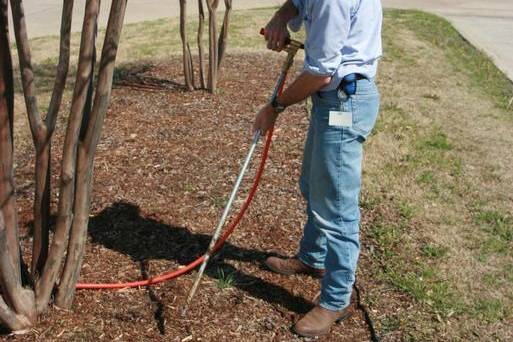
We visit the property, look at the trees, and pull soil samples from the right spots in the root zone.

WEEK 1 TO 2
Lab analysis
The samples go to the lab for analysis of pH, nutrients, and texture, which takes a week or two to come back.
RESULTS
Recommendations
We interpret the results for your trees and deliver plain recommendations, not just a page of numbers.
ONGOING
Action and retest
Any feeding or amendments are carried out from the recommendations, and the soil can be retested down the road to confirm it worked.
What you receive
An objective picture of what your soil actually provides, and a clear recommendation for what to do about it, written for your trees. Sometimes that means a specific feeding or amendment, and sometimes it means the soil is fine and your money belongs somewhere else. Either way, you stop guessing and the next dollar goes where the test says it will work.
Why CSRA homeowners choose Arborwright


Diagnostic-first tree care
Most tree services start with “what do you want us to do?” We start with “what’s actually going on?” Arborwright is built around plant health care and diagnostic-first work, which means we look at your tree, identify what’s wrong, and tell you honestly what it needs. Sometimes that means treatment. Sometimes it means a pruning plan. Sometimes it means removal. We tell you which, with the evidence to back it up.
Our arborists know the CSRA’s clay-heavy soils, humid subtropical climate, and the tree species that thrive and struggle here. Local conditions matter. We show up prepared for them.
Science-based diagnostics
Every recommendation backed by plant pathology, soil science, and real evidence.
Honest recommendations
We tell you what your tree actually needs, even when it's less work for us.
The people behind arborwright
Real credentials. Real expertise. Real local knowledge.

Burns Newsome
Founder & Plant Health Care Specialist
Licensed Applicator | B.S. Biology + M.S. Genetics | Former Vanderbilt Research Team
I come from a research background. Before founding Arborwright Tree Care, I spent several years as part of a research team at Vanderbilt University Medical Center, where careful observation and methodical thinking defined the job. I hold two degrees in the biological sciences, and I apply that same research-first mindset to every tree I evaluate.
What drives my work is a deep passion for healthy ecological landscapes. I believe most struggling trees can be saved when the right diagnosis comes first. Removal is a last resort, not a default. Across North Augusta, Aiken, Augusta, and the rest of the CSRA, I help homeowners understand what’s actually happening with their trees, from crape myrtle bark scale to root stress to storm damage, and build treatment plans backed by evidence instead of guesswork.
When I’m not in the field, I’m on my own land with my two boys: catching critters, fishing, and managing the property to support the greatest diversity of life it can hold. That’s how this business started. At some point, working within the constraints of my own backyard wasn’t enough. I wanted to care for the landscape around me in a meaningful way, and help the people in my community do the same. Arborwright is how I do that.
Thomas Wilson
ISA Certified Arborist®
ISA Certified Arborist® | ISA Member | 13 Years of Field Experience
I came up in tree work in Tennessee, where I spent years climbing, pruning, and learning how trees actually behave under load and stress. There is no shortcut for that kind of time in the canopy. When I moved to the CSRA, I brought that hands-on foundation with me and adapted it to a new set of species, the region’s clay-heavy soils, and a much longer growing season.
Earning my ISA Certified Arborist® credential held that field experience to a documented, tested standard. My focus is structure and risk: how a tree is built, where it is weak, and what it is likely to do in the next storm. I would rather find a failure point on a calm afternoon than after a limb is already down on someone’s roof.
What I value most is the work that keeps a mature tree standing. A large, established tree takes decades to replace, and most of the ones I assess can be kept healthy and sound when someone reads them early and acts on what they find. That is the part of this job I care about, and it is why I am glad to do it here in the CSRA.

Soil testing pricing
The on-site visit is free. The soil test itself, including lab analysis and a written recommendation for your trees, is a flat fee that typically ranges per sample, depending on the factors below.
- Number of samples or areas
- Depth of analysis requested
- Number of trees or property size
- Standard or specialized testing
- Standard or specialized testing
- Recommendations and follow-up included
Your soil test includes
Your soil test includes proper root-zone sampling, full lab analysis of pH, nutrients, and texture, and a written recommendation interpreted for your specific trees. If the results call for feeding or amendments, the report ties directly into a plan, so the test pays for itself by aiming the next dollar correctly.
Frequently asked questions
Everything property owners ask about tree soil testing.
The on-site visit is free, and the soil test itself is a flat fee that depends on the number of samples, the depth of analysis, and the size of the property. It costs more than a mail-in extension test, because it includes proper root-zone sampling and a recommendation interpreted for your trees, which is the part that actually saves money on amendments.
You can, and it will give you accurate numbers cheaply. The problem is what comes next: those reports are written for lawns and crops and recommend what they need, which is often the opposite of what a tree needs. The value of a tree soil test is the interpretation, reading the results for your specific trees so you treat the real problem.
A proper test measures pH, which controls whether a tree can absorb the nutrients present, the levels of nitrogen, phosphorus, potassium, and micronutrients, and the soil’s texture and organic matter. Together these reveal whether a tree is actually short on nutrients or whether something like pH or compaction is locking up nutrients already there.
Before spending money on fertilizer, lime, or amendments, when a tree is declining for no obvious reason, when planning a tree care program, or when problems keep recurring in the same area. Testing first turns guesswork into a plan, and it often shows that the cheapest fix is doing less, not more.
An arborist pulls soil from the tree’s root zone at the right depth and from several points, since sampling location changes the result. The samples are analyzed in a lab for pH, nutrients, and texture, and the results are interpreted for your specific trees. You receive plain recommendations rather than just a page of numbers.
Much of the region has clay-heavy soils that compact easily and drain poorly, and many sites run acidic. Those conditions often lock up nutrients that are already present, so a tree can look starved while the soil technically has what it needs. This is exactly why testing matters here, because the obvious fix, more fertilizer, is frequently the wrong one.
The recommendation tells you the specific action: add a certain nutrient, adjust pH up or down by a set amount, relieve compaction, add organic matter, or leave the soil alone. If feeding or amendments are warranted, the plan ties straight into deep root fertilization or soil work. The point is to act on data instead of a guess.
Most companies either skip testing and sell a fertilization routine, or hand you raw lab numbers with no tree-specific guidance. Arborwright does both halves: proper sampling and analysis, then interpretation by Burns Newsome, who has two degrees in the biological sciences and a research background reading exactly this kind of data.
For most landscape trees, every few years is plenty, and again after a major change like construction, regrading, or a new planting. Soil chemistry shifts slowly, so annual testing is rarely necessary. Retesting after amendments confirms the correction worked, which is the only way to know a treatment actually changed the soil.
Being present for the sampling visit helps so we can talk through the trees and your concerns, but it is not required if access is arranged in advance. The samples are pulled from the root zone, the lab work happens off site, and the written recommendations are delivered once the results come back, usually within a week or two.
Trusted by homeowners across the CSRA
Real reviews from real customers across North Augusta, Augusta, Aiken, and the CSRA. Want to be one of them? Schedule your free inspection.
Tree soil testing near you
Arborwright provides tree soil testing across North Augusta and Aiken, into Augusta, Evans, Martinez, and Grovetown, and the wider CSRA including Edgefield, Columbia County, and Aiken County. Find your area below.
North Augusta, SC
Hammond’s Ferry, Riverview Park, downtown North Augusta. Our home base.
Augusta, GA
West Augusta, Summerville, National Hills, Forest Hills, downtown.
Aiken, SC
Downtown Aiken, Houndslake, Woodside, Hitchcock Woods area.
Evans, GA
Riverwood Plantation, Evans to Locks, Kiokee.