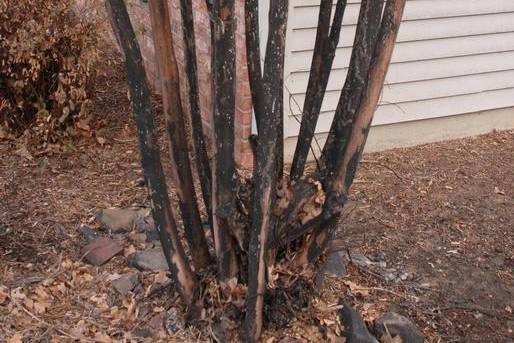
If the trunk and branches of your crape myrtle look like they were dusted with soot, you are not alone. This is one of the most common calls we get in the CSRA every summer. Here is what causes it, how to confirm it on your own tree, and what actually fixes it.
Quick answer
That black film is sooty mold, a fungus growing on the sticky honeydew that crape myrtle bark scale leaves behind as it feeds. The mold itself does little direct harm, but the scale underneath is draining the tree. The fix is a systemic insecticide, applied to the soil or trunk and timed to spring crawler activity, followed by patience while the mold weathers off.
In this article
What causes the black coating on crape myrtles
The black layer itself is sooty mold, a fungus that grows on honeydew, the sugary waste that crape myrtle bark scale leaves behind as it feeds on the tree’s vascular tissue. The mold does not attack the tree directly, but a heavy coating shades leaf and bark surfaces while the scale underneath drains stored energy, and together they dim the canopy and cut blooming.
Crape myrtle bark scale is a felt scale that arrived from Asia by way of Texas in the mid 2000s and has since spread across the Southeast, including CSRA neighborhoods. Look for white or gray felt-like bumps on the trunk and branches. Crush one with a fingernail and it bleeds pink, which is the giveaway that separates it from lichen or old pruning scars.
One caution before you diagnose: crape myrtle aphids also produce honeydew and sooty mold. Aphids feed on the undersides of leaves, while bark scale sits on the trunk and branch crotches. Plenty of trees in a stressed year host both.
How to check for bark scale under the sooty mold
Start at the branch crotches and pruning wounds, which is where the scale clusters first. Part the black film and look for the white felt bumps underneath, then do the crush test. Pink smear means bark scale.
While you are looking, you may spot small dark beetles with two red spots, or their spiky gray and black larvae. Do not treat those. They are twice-stabbed lady beetles, the main natural predator of this scale, and the larvae are mistaken for pests constantly. Their presence is a good sign, but on a heavy infestation they cannot eat their way to a cure.
Finally, flip a few leaves. If the undersides are dotted with tiny yellow-green insects, aphids are part of the picture too, and treatment should account for both.
Treatment options and timing in South Carolina
The reliable fix for bark scale is a systemic insecticide that the tree takes up and moves through its vascular system, reaching the scale where sprays cannot. Depending on the tree and the site, that is applied as a soil treatment or directly to the trunk. In the CSRA, the window that matters is spring, when the tree is actively growing and the first generation of crawlers emerges. Treated then, most trees stay protected through the season. Later treatments still help, but the mold has had months to build by that point.
Two things a homeowner should know before reaching for a box store drench. First, crape myrtles are magnets for bees in bloom, so product choice and timing matter, and this is a case where the label really is the law. Second, the black does not disappear when the scale dies. Sooty mold weathers off gradually over weeks to months, and a gentle wash of the trunk with a soft brush and mild soapy water can speed it along. Skip the pressure washer, which tears up the thin bark crape myrtles are named for.
This is exactly what our crape myrtle bark scale treatment covers, from confirming the diagnosis through a treatment plan matched to the tree, handled by a South Carolina Licensed Applicator.
What we’re seeing in North Augusta and Aiken
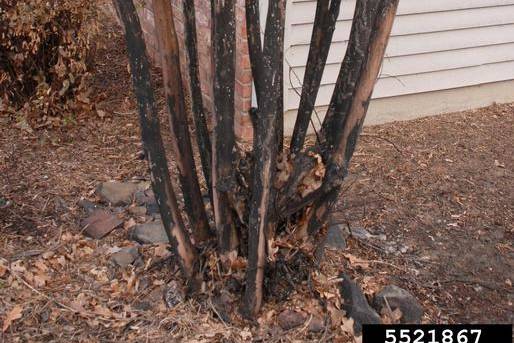
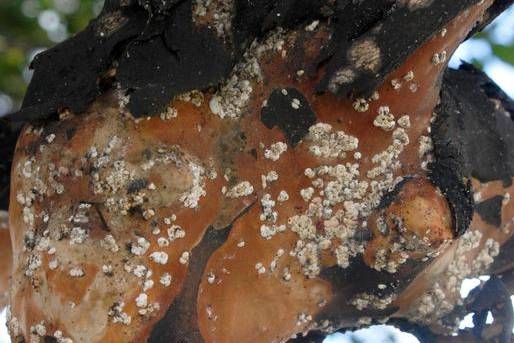
This drought year is making bark scale worse. With the region running 8 to 16 inches behind on rainfall, stressed crape myrtles are an easier target, and we are seeing heavier honeydew and faster mold buildup than a normal summer, from established neighborhoods in North Augusta to properties across Aiken County. The pattern we see on treated trees is consistent: scale activity stops within weeks, and by 60 to 90 days the canopy is visibly cleaner and the tree is putting energy back into growth.
Frequently asked questions
Will the sooty mold kill my crape myrtle?
No. The mold only grows on the honeydew and does not feed on the tree. The real stress is the scale underneath, which weakens the tree and cuts blooming over time. Treated trees recover well.
When is the best time to treat crape myrtle bark scale in South Carolina?
Spring, while the tree is actively growing and before crawler generations build through the summer. A spring systemic treatment typically protects the tree for the season. If you find it in late summer, treatment is still worthwhile, just expect the black to linger longer.
Can I pressure wash the black off the trunk?
No. Pressure washing damages the thin, exfoliating bark. A soft brush with mild soapy water is safe and removes some mold and scale, but without treating the scale itself, both come right back.
Will it spread to the rest of my landscape?
Not meaningfully. This scale is a crape myrtle specialist, and while it has been found on a few other plants, your oaks, pines, and shrubs are not at risk the way another crape myrtle across the yard is.