A pine that was green in June turns yellow in August and red by September. It is one of the most common calls we get, and the answer is almost always bark beetles. But there are three different beetles that do this, they mean very different things, and the treatment for one is close to useless for another. Here is how to tell them apart.
Quick answer
Three bark beetles kill pines in the CSRA. Southern pine beetle attacks healthy trees and spreads tree to tree, so it demands fast action. Ips engraver beetles only attack trees already weakened by drought or damage, so the fix is correcting the stress, not spraying. Black turpentine beetle attacks the lower trunk and signals root injury. Identifying which one you have determines everything that follows.
In this article
Why it matters which beetle you have
Bark beetles sort into two categories, and the category decides the entire response.
Some are aggressive. They can overwhelm and kill a healthy, well-watered pine by attacking in enormous numbers at once, releasing chemical signals that recruit thousands more beetles to the same tree within days. A healthy pine defends itself by flooding attackers with resin, but mass attack simply exceeds what the tree can produce.
Others are opportunists. They can only colonize a pine whose defenses are already compromised by drought, lightning, root damage, or storm breakage. A well-hydrated pine pitches them out without difficulty.
This distinction is not academic. If the beetle is aggressive, it is the cause, and you have to interrupt the spread quickly. If the beetle is an opportunist, it is a symptom, and killing it accomplishes nothing because the real problem is whatever weakened the tree in the first place.
Southern pine beetle: the one that spreads
Southern pine beetle is the aggressive one and the most destructive forest insect in the South. It attacks loblolly, shortleaf, and Virginia pine especially hard.
You recognize it by pattern more than anything else. Southern pine beetle creates what foresters call a spot: a group of dead and dying pines with an edge that keeps expanding in one direction. It moves from tree to tree through the stand, and in warm weather a spot can grow from a handful of trees to a large area in a single season.
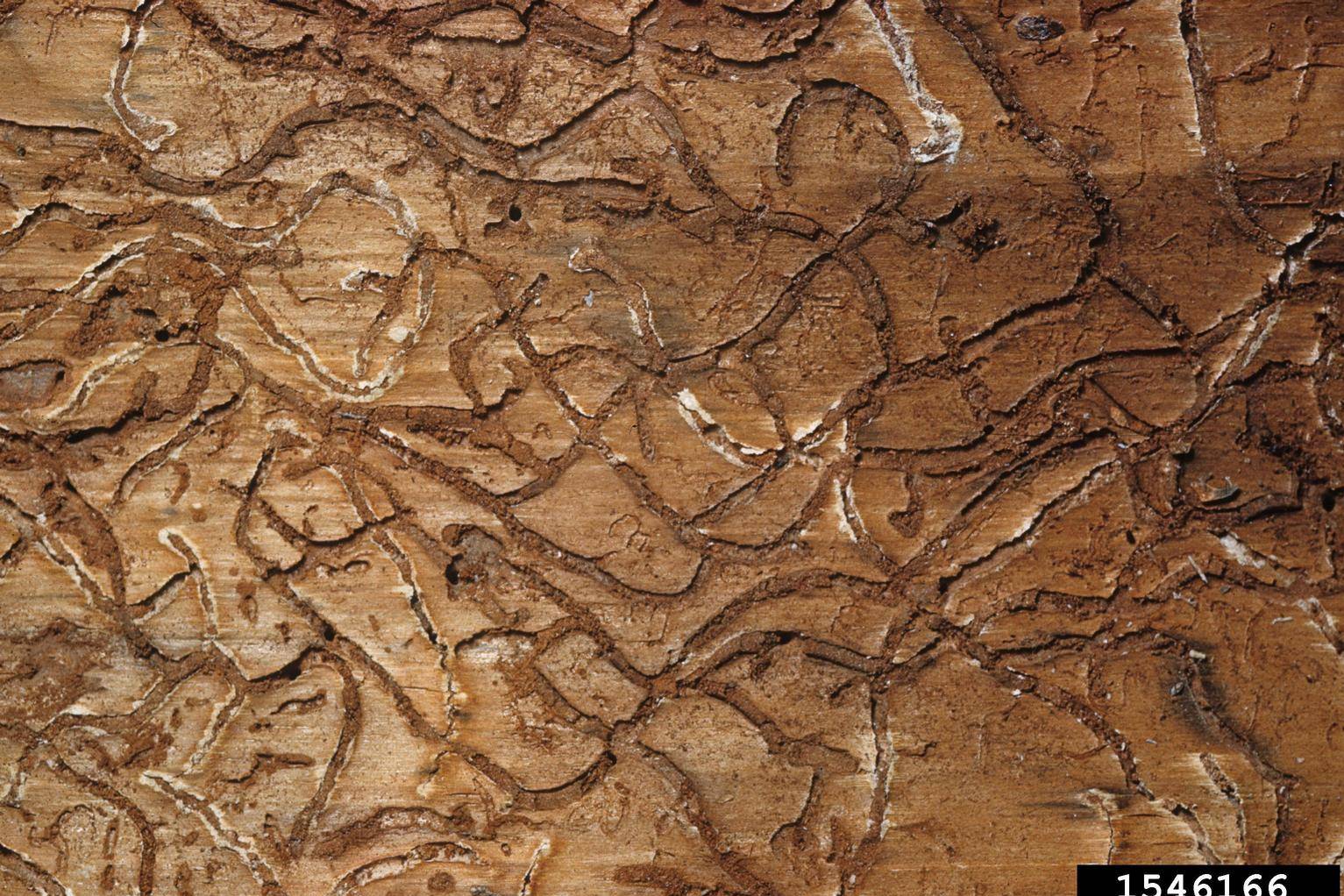
On the trunk you will see popcorn-sized pitch tubes scattered across the whole bole, white to pinkish, where the tree tried to push the beetles out. Under the bark, the galleries are winding S-shapes that cross over each other and are packed solid with sawdust.
Here is the part almost nobody knows, and it is the most important thing in this article. The crown does not fade until weeks after the attack. By the time a pine is red, the beetles have usually already emerged and moved on to the neighbors. The red trees are history. The threat is the green trees at the edge of the spot that are under attack right now and will not show it for another month.
That is why removing only the obviously dead trees accomplishes nothing. Controlling a spot means taking out the infested trees plus a buffer of apparently healthy green pines beyond the leading edge, before the next generation emerges. It is a difficult conversation to have with a property owner, and it is also the only thing that works.
Ips engraver beetles: the drought opportunist
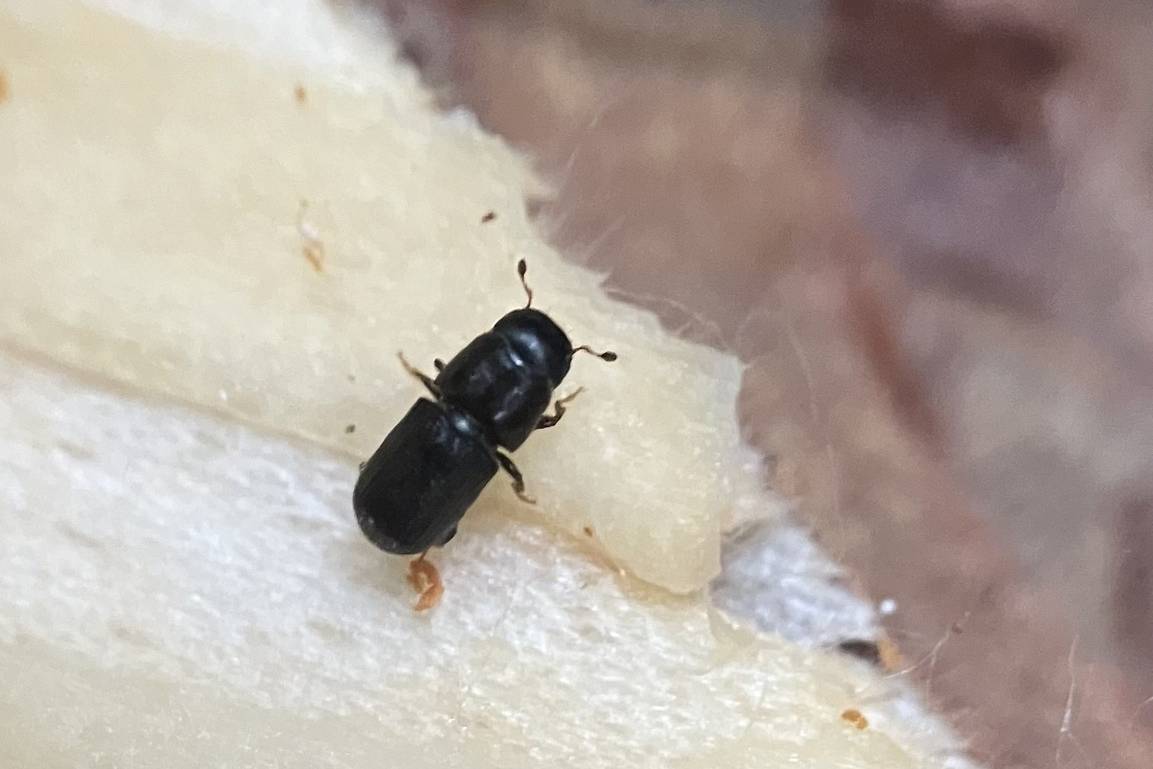
Ips are the opportunists, and in a year like this one they are far more common than southern pine beetle.
The pattern is completely different. Instead of an expanding spot, you get scattered individual trees or small clusters across the property, in no particular arrangement. There is no leading edge because there is no coordinated spread. Each tree died because that tree was stressed.
On the trunk you may see small pitch tubes or none at all. More often the sign is reddish boring dust collecting in the bark crevices, at the base of the tree, or caught in spider webs on the trunk. Under the bark, the galleries are clean, sharply etched shapes that radiate from a central chamber, forming rough I, Y, H, and X patterns. Unlike southern pine beetle galleries, they are not packed with sawdust.
There are three Ips species here and they divide the tree between them. The smallest works the top and branches, which produces a dead top on an otherwise green tree. That top-kill pattern is a classic drought signature and gets misread constantly. The mid-sized species works the middle of the trunk, and the largest works the thick bark near the base.
The critical point about Ips: spraying does not solve it. You can kill every beetle on the tree and the next drought-stressed pine on the property will be colonized just the same. The treatment is correcting the stress.
Black turpentine beetle: a signal, not a threat
The third one is easy to identify because of where it attacks. Black turpentine beetle works only the lower six to eight feet of the trunk and the root collar. Nothing higher.
Its pitch tubes are large, often the size of a quarter or bigger, white to reddish, and they run down the bark. It is the largest of the three beetles and it rarely kills a tree on its own.
What it tells you is more useful than what it does. Black turpentine beetle concentrates where the lower trunk or root system has been injured, which usually means construction damage, grading, fill dirt piled over the roots, trenching, or fire. Finding it is a reason to go investigate the root collar and the site history.
The one thing every property owner should do right now
If you have fresh pine on the ground, get rid of it.
Ips beetles breed prolifically in downed pine, storm-broken tops, fresh logs, and green pine firewood. They multiply in that material and then emerge to attack the standing pines nearby. A pile of pine logs stacked beside live pine trees is a beetle nursery.
This is a real issue across the CSRA right now because of how much pine material Hurricane Helene put on the ground in 2024. Combine that with a drought year and you have both the breeding substrate and the stressed hosts in the same landscape.
Lightning-struck pines matter for the same reason and are even more urgent. A pine hit by lightning can be colonized within hours in warm weather.
What actually works
For southern pine beetle, the answer is speed. Identify the direction the spot is expanding, remove the infested trees plus a buffer of green trees at the leading edge, and handle the wood properly rather than leaving it on site. Preventive trunk sprays can protect individual high-value trees, but only if applied before attack and only with full coverage of the trunk, which is often impractical on a tall mature pine.
For Ips, the answer is water and soil. Deep, infrequent irrigation that wets the root zone eight to twelve inches down beats shallow daily watering every time. Mulch out toward the drip line, never against the trunk. Relieve compaction where the site calls for it. Check whether the root flare is buried, because a pine planted or graded too deep is a pine under permanent stress. And do not fertilize a severely drought-stressed tree, which pushes growth it cannot support.
For black turpentine beetle, address the root and lower stem injury that invited it. Lower trunk sprays are actually practical here because the entire attacked area is within reach from the ground.
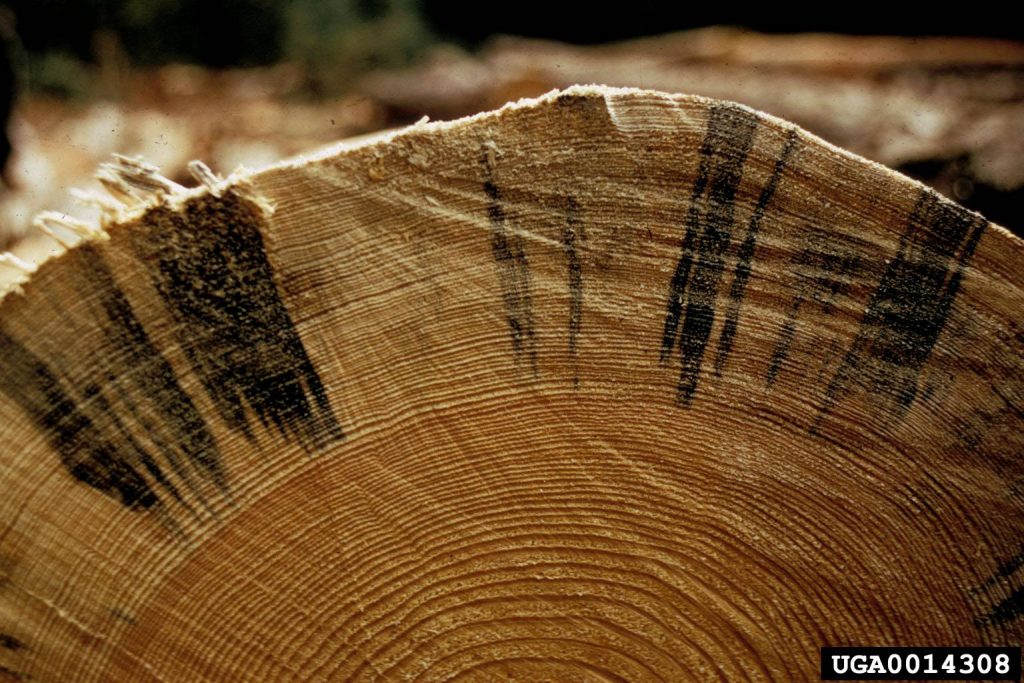
What does not work in any of these cases is treating a pine that is already fully colonized. Once beetles are under the bark and blue stain fungus is blocking the water-conducting tissue, no product brings that tree back. Anything sold as a rescue treatment for a red-topped pine is being oversold.
What we are seeing in North Augusta, Aiken, and the greater Augusta area
Nearly every pine mortality call we have run this season has come back to Ips rather than southern pine beetle, and that tracks with the regional data. Trapping numbers across Georgia this year came in at moderate levels and actually declined from last year, with no counties showing high probability of a southern pine beetle outbreak.
What we do have is drought. Aiken County is running one of its driest years in over a century of record keeping, and Georgia declared its first statewide drought response since 2012 this spring. Add the pine debris still sitting on properties from Helene and you have a textbook setup for scattered Ips mortality.
The pattern is consistent from North Augusta and Aiken across to Augusta, Evans, and Martinez: individual pines fading in yards where the rest of the stand looks fine, often with the top going first. Those are stress calls, not outbreak calls, and the property owners who address the water and soil situation keep more of their pines than the ones who buy a spray.
If pines on your property are fading and you want to know which beetle you are dealing with, that answer comes from peeling bark on the right tree and reading the galleries. It takes a few minutes and it changes the entire recommendation.
Frequently asked questions
Can a pine tree with bark beetles be saved?
Once beetles are established under the bark, no. The blue stain fungus they carry blocks the tree’s water-conducting tissue, and no treatment reverses that. Preventive sprays protect uninfested trees, but nothing rescues a pine that is already fading.
Will bark beetles spread to my other pine trees?
It depends which beetle. Southern pine beetle spreads aggressively from tree to tree and will keep moving through a stand until it is stopped. Ips engraver beetles only colonize trees that are already stressed, so healthy, well-watered pines nearby are generally not at risk.
Should I remove a dead pine tree right away?
Usually yes, for safety rather than pest control. Dead pines lose structural integrity quickly and begin dropping bark and limbs within months. If the tree is near a house, driveway, or power line, it becomes a hazard well before it falls.
Do bark beetles attack hardwood trees?
Not these three. Southern pine beetle, Ips, and black turpentine beetle are all pine specialists. Oaks, maples, and other hardwoods have their own borers, but they are different insects with different signs and different treatment.