
TREE INVENTORY & MANAGEMENT

Commercial Tree Inventories in North Augusta, Aiken, and the CSRA

Responsible for hundreds of trees across an HOA, a campus, or a portfolio, with no real record of what you have or what it will cost? A tree inventory turns a property full of unknowns into a mapped, prioritized, budgeted plan, so tree care stops being a string of emergencies. Arborwright builds commercial and municipal tree inventories across North Augusta, Aiken, Augusta, Evans, Martinez, and the surrounding CSRA.

Get your FREE

Tree Inspection

We’ll call you within one business day to schedule your free on-site inspection. No obligation, no hard sell, no upsells you don’t need.

By submitting, you agree we may contact you by phone, text, or email about your request. Msg/data rates may apply. Reply STOP to unsubscribe. See our Privacy Policy.

What is a commercial tree inventory?

A commercial tree inventory is a systematic, mapped catalog of every significant tree on a property, recording each tree’s species, size, location, condition, and risk, then turning that data into a prioritized, budgeted management plan. It replaces guesswork and reactive emergencies with a clear picture of what you have, what it needs, and what it will cost over the coming years. Arborwright builds tree inventories and management plans for commercial, HOA, and municipal properties across North Augusta, Aiken, and the CSRA.

WHO NEEDS ONE

Who needs a tree inventory?

An inventory makes sense once a property has more trees than anyone can track in their head, and once the cost of those trees is real. It is built for the people accountable for a large tree population and the budget and liability that come with it.

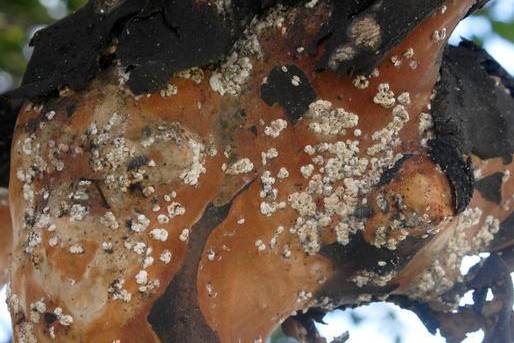
White waxy crepe myrtle bark scale colonies in branch crotches showing Acanthococcus lagerstroemiae infestation
Arborist conducting a tree inventory on an HOA common area
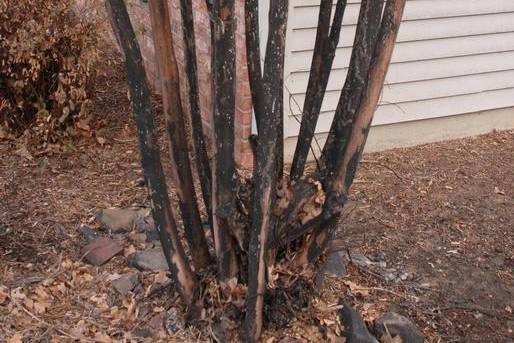
Crepe myrtle trunk coated in black sooty mold from bark scale honeydew, a common CSRA symptom
GPS-tagging and assessing a campus tree
Commercial tree inventory and condition survey
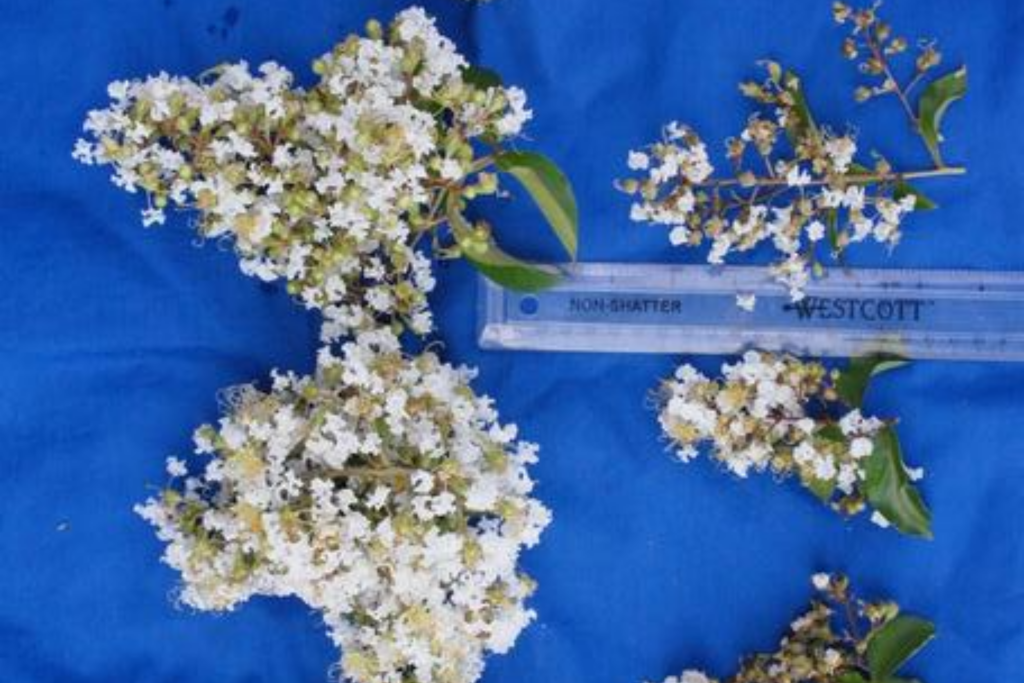
Side-by-side comparison of uninfected crepe myrtle blooms next to reduced blooms from bark scale infestation
Mapping a property's tree population

Managing more trees than you can track? Request a free walkthrough and inventory proposal.

WHY IT MATTERS

Why can't you manage trees you have never counted?

Most large properties manage their trees by accident. There is no list, no map, and no plan, just a vague sense that there are a lot of trees and a scramble every time one drops a limb or a board member asks what the tree budget should be. Without data, every tree care decision is reactive, every cost is a surprise, and the only trees that get attention are the ones that already failed. You cannot budget for, prioritize, or defend a tree population you have never actually counted.

An inventory replaces all of that with information. Every significant tree is located, measured, and assessed for condition and risk, and that data becomes a map and a prioritized work plan: which trees are hazards that need attention now, which need routine care, which can simply be monitored, and which are healthy and can be left alone. From there a multi-year budget falls out naturally, because you finally know what you are dealing with. Reactive emergencies turn into planned, scheduled, line-item work a board or an owner can approve.

It is also the strongest liability position a property can hold. After a tree fails, the hardest question is whether anyone was paying attention, and a current inventory with documented condition and risk data answers it. We build these inventories, assessing each tree, and Burns Newsome brings the data and analysis background that turns a survey into a plan. The result is a property that is managed on purpose, with the record to prove it.

"You would never run a building without knowing how many units you have or what shape they are in, but that is exactly how most properties run their trees. Count them, grade them, map them, and suddenly the chaos becomes a budget. And when a tree does fail, you are holding a record that says you were watching, which is worth more than people realize until they need it."

Burns Newsome, Licensed Applicator and biology-degreed founder of Arborwright Tree Care, explaining crepe myrtle bark scale treatment in the CSRA
Burns Newsome
Licensed Applicator · B.S. Biology · M.S. Genetics
HOW IT WORKS

How does an Arborwright tree inventory work?

Step 01 · Scope the property

We start by defining what to inventory: the whole property, a problem area, or specific tree classes, and what data you need, from a basic count to full condition and risk on every tree. The scope is matched to your budget and what the data is for.

Step 02 · Survey and record

Each tree is located and logged with its species, size, condition, and risk, tagged to a map so it can be found again. The field assessment is done by a credentialed arborist, not a clipboard, so the condition and risk data is reliable.

Step 03 · Prioritize and plan

The data is turned into a prioritized management plan: immediate hazards first, then routine care, monitoring, and removals, with the work sequenced and budgeted over a realistic timeline. You get a plan you can act on, not just a spreadsheet.

Step 04 · Deliver and update

You receive the inventory as a map and usable data plus a written plan, in a form you can hand to a board, an owner, or an insurer. As work is done and trees change, the inventory is updated so it stays a living record rather than a one-time snapshot.

THE MANAGEMENT CYCLE

How a tree inventory becomes an ongoing plan

BASELINE

The inventory

Every significant tree is surveyed, mapped, and assessed, giving you a complete baseline of what you have and its condition.

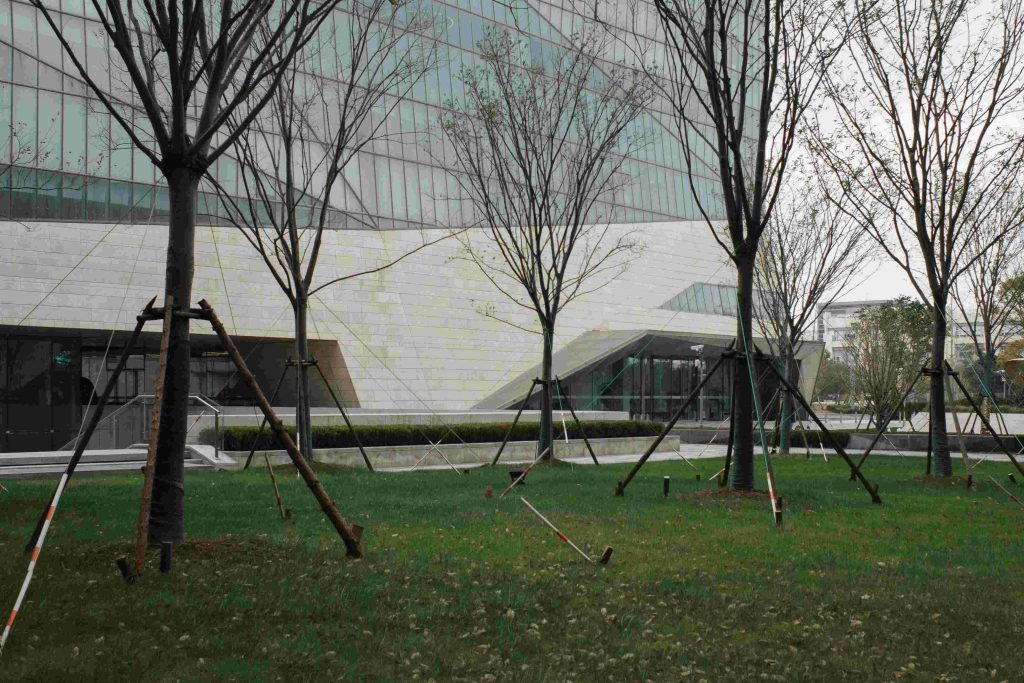
Recently planted, staked trees in an office park, maintained by Arborwright in North Augusta SC
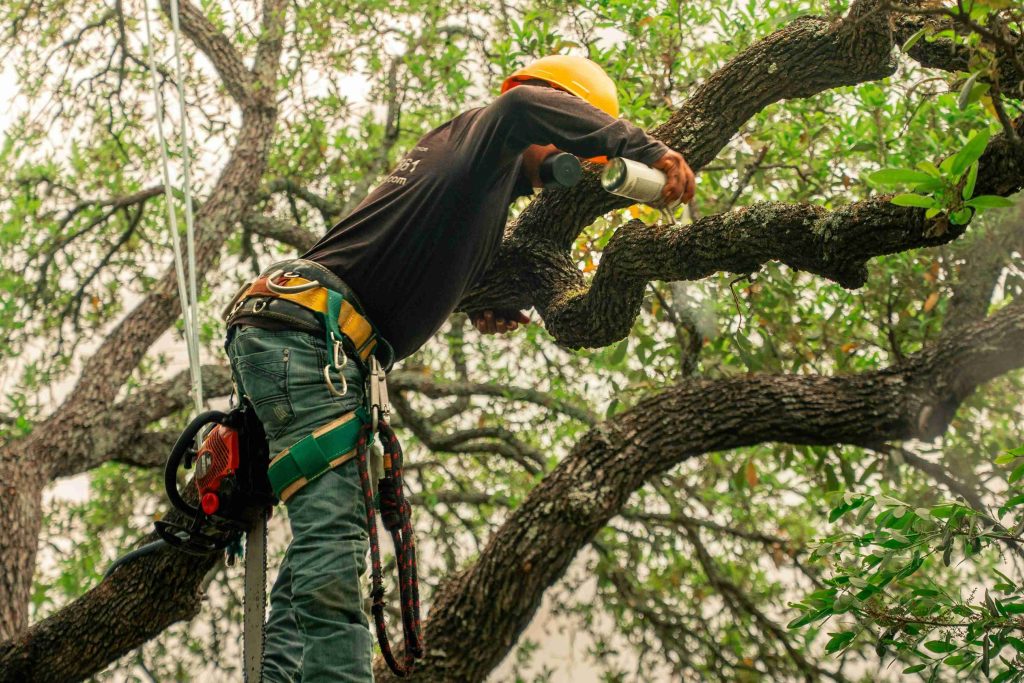
An arborist in a respirator treating a tree from the canopy, by Arborwright in Aiken SC

YEAR 1

Prioritized work

The plan is put into action, hazards and high-priority trees first, with the work scheduled and budgeted rather than reactive.

ONGOING

Scheduled care

Routine care, monitoring, and removals proceed on the plan’s timeline, with the inventory updated as work is completed.

Healthy green tree foliage after fertilization, maintained by Arborwright in Augusta GA
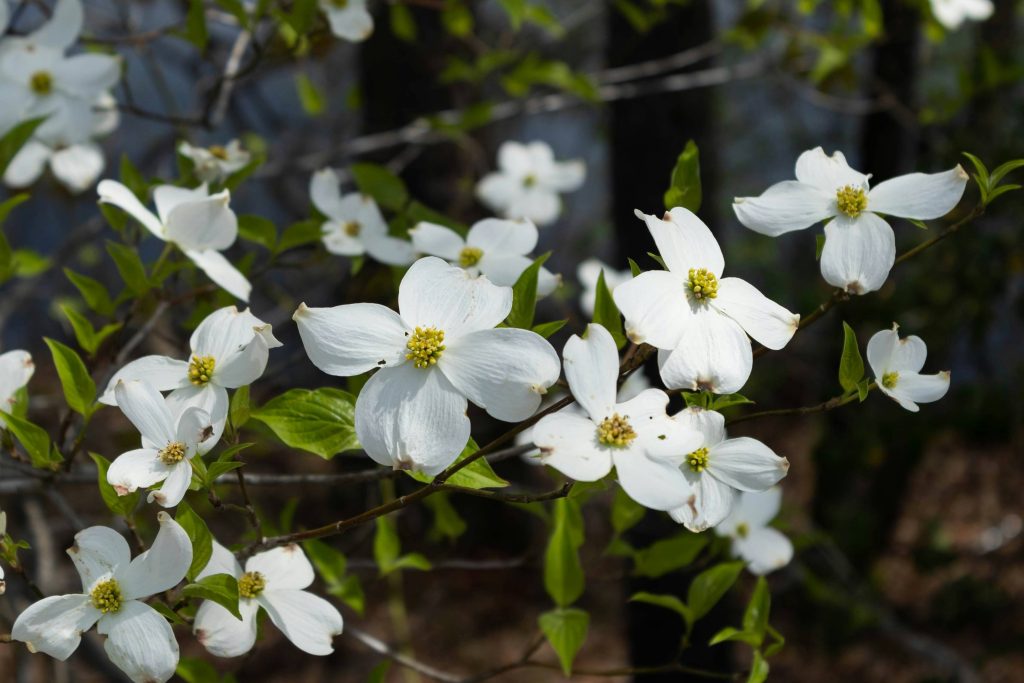
A white-flowering landscape tree on a managed property, by Arborwright in North Augusta SC

EVERY 3 TO 5 YEARS

Re-inventory

The population is re-surveyed on a cycle, since trees grow, decline, and change, keeping the data and the budget current.

What the plan delivers

A tree population that is mapped, prioritized, budgeted, and documented, instead of a liability nobody can quantify. Over a full cycle you get predictable budgeting, hazards handled before they fail, and a defensible record of stewardship. The inventory is most valuable as a living plan that is kept current, which is why the update and re-inventory steps matter as much as the first survey.

Plant Health Care Specialists

Why CSRA homeowners choose Arborwright

Arborwright Tree Care Icon — tree care and plant health care in North Augusta SC

Diagnostic-first tree care

Most tree services start with “what do you want us to do?” We start with “what’s actually going on?” Arborwright is built around plant health care and diagnostic-first work, which means we look at your tree, identify what’s wrong, and tell you honestly what it needs. Sometimes that means treatment. Sometimes it means a pruning plan. Sometimes it means removal. We tell you which, with the evidence to back it up.

Our arborists know the CSRA’s soils, humid subtropical climate, and the tree species that thrive and struggle here. Local conditions matter. We show up prepared for them.

Science-based diagnostics

Every recommendation backed by plant pathology, soil science, and real evidence.

Honest recommendations

We tell you what your tree actually needs, even when it's less work for us.

Meet The Team

The people behind arborwright

Real credentials. Real expertise. Real local knowledge.

Burns, Founder and Plant Health Care Specialist at Arborwright Tree Care, serving North Augusta, Aiken, and the CSRA

Burns Newsome

Founder & Plant Health Care Specialist

Licensed Applicator | B.S. Biology + M.S. Genetics | Former Vanderbilt Research Team

I come from a research background. Before founding Arborwright Tree Care, I spent several years as part of a research team at Vanderbilt University Medical Center, where careful observation and methodical thinking defined the job. I hold two degrees in the biological sciences, and I apply that same research-first mindset to every tree I evaluate.

What drives my work is a deep passion for healthy ecological landscapes. I believe most struggling trees can be saved when the right diagnosis comes first. Removal is a last resort, not a default. Across North Augusta, Aiken, Augusta, and the rest of the CSRA, I help homeowners understand what’s actually happening with their trees, from crape myrtle bark scale to root stress to storm damage, and build treatment plans backed by evidence instead of guesswork.

When I’m not in the field, I’m on my own land with my two boys: catching critters, fishing, and managing the property to support the greatest diversity of life it can hold. That’s how this business started. At some point, working within the constraints of my own backyard wasn’t enough. I wanted to care for the landscape around me in a meaningful way, and help the people in my community do the same. Arborwright is how I do that.

Thomas Wilson

ISA Certified Arborist®

ISA Certified Arborist® | ISA Member | 13 Years of Field Experience

I came up in tree work in Tennessee, where I spent years climbing, pruning, and learning how trees actually behave under load and stress. There is no shortcut for that kind of time in the canopy. When I moved to the CSRA, I brought that hands-on foundation with me and adapted it to a new set of species, the region’s soils, and a much longer growing season.

Earning my ISA Certified Arborist® credential held that field experience to a documented, tested standard. My focus is structure and risk: how a tree is built, where it is weak, and what it is likely to do in the next storm. I would rather find a failure point on a calm afternoon than after a limb is already down on someone’s roof.

What I value most is the work that keeps a mature tree standing. A large, established tree takes decades to replace, and most of the ones I assess can be kept healthy and sound when someone reads them early and acts on what they find. That is the part of this job I care about, and it is why I am glad to do it here in the CSRA.

Thomas Wilson, ISA Certified Arborist at Arborwright Tree Care in North Augusta, SC
Investment

Tree risk assessment pricing

The on-site risk assessment is free. If mitigation is needed, the work is quoted from the findings and typically ranges depending on the factors below.

Your inventory includes

Your inventory includes a mapped survey of the trees in scope, species, size, condition, and risk recorded per tree, and a prioritized, budgeted management plan in a form a board or owner can act on. We lead the field assessment, and the free walkthrough scopes the project before you commit to anything.

Common Questions

Frequently asked questions

Everything property managers and boards ask about commercial tree inventories.

The walkthrough and proposal are free, and the inventory is priced by the number of trees and the depth of data collected. A basic count costs far less than a full condition and risk assessment on every tree, so the price is scoped to what the inventory is for. Pricing is itemized so a board or owner can see exactly what they are approving.

A tree inventory is a systematic, mapped catalog of the significant trees on a property, recording each one’s species, size, location, condition, and risk. That data is turned into a prioritized, budgeted management plan. It replaces a vague sense of having a lot of trees with a clear picture of what you have, what it needs, and what it will cost.

Because you cannot budget for, prioritize, or defend a tree population you have never counted. Without an inventory, tree care is reactive and every cost is a surprise. With one, hazards are caught before they fail, work is scheduled and budgeted, and you hold a documented record of condition and risk that protects the property if a tree ever does fail.

The inventory is the data foundation, and the commercial care program is the work done on it. An inventory tells you what trees you have and what each one needs, and the commercial program carries out that care on a schedule. Many clients start with an inventory to size the problem, then move into a managed program to handle it.

An arborist scopes the property, then locates and logs each significant tree with its species, size, condition, and risk, tagged to a map. The data is turned into a prioritized, budgeted plan, with immediate hazards flagged first. You receive the inventory as a map and usable data plus a written plan you can act on and update over time.

You receive a mapped inventory of the trees, the recorded data for each one, and a written management plan with priorities and budget. The data is delivered in a usable, shareable format rather than locked in one person’s head, so it can be handed to a board, an owner, an insurer, or the next manager and still make sense.

After a tree fails, the question that decides a claim is whether anyone was monitoring the trees. A current inventory with documented condition and risk data shows that the property was assessed by a credentialed arborist and managed on a plan. That documented stewardship is exactly the due diligence an insurer or attorney looks for.

The data should be updated as work is completed, and the full population re-surveyed every three to five years, because trees grow, decline, and change condition over time. A one-time inventory is useful, but its real value comes from being kept current as a living management record rather than a snapshot that slowly goes out of date.

The condition and risk data is only as good as the arborist collecting it. Thomas Wilson is an ISA Certified Arborist® with 13 years of field experience doing the assessment, and Burns Newsome brings a research and data background that turns the survey into an actionable plan. You get reliable per-tree data and a plan built to be used, not a generic spreadsheet.

It begins with a free walkthrough. An arborist looks at the property, discusses what the inventory is for, and scopes the project, then delivers a proposal with itemized pricing. From there you decide on the depth of data and whether to pair the inventory with an ongoing management program, with no obligation.

Real reviews from real customers

Trusted by homeowners across the CSRA

Real reviews from real customers across North Augusta, Augusta, Aiken, and the CSRA. Want to be one of them? Schedule your free inspection.

Mary Client

Couldn't be happier with how my trees were treated with Arborwright Tree Care. I will be using them again!

Charlotte Client

My crepe myrtle with white bark scale. Arborwright diagnosed the tree, and had it on a treatment plan the next day.

Emma Client

Love working with their experienced arborist. It was a pleasurable experience working with Arborwight Tree Care.

Service Area

Commercial tree inventories near you

Arborwright builds commercial, HOA, and municipal tree inventories across North Augusta and Aiken, into Augusta, Evans, Martinez, and Grovetown, and the wider CSRA including Edgefield, Columbia County, and Aiken County. Find your area below.

Hammond’s Ferry, Riverview Park, downtown North Augusta. Our home base.

West Augusta, Summerville, National Hills, Forest Hills, downtown.

Downtown Aiken, Houndslake, Woodside, Hitchcock Woods area.

Riverwood Plantation, Evans to Locks, Kiokee.

Photo Credits

None