If you live in Aiken, you have probably seen the stumps. Over the past year the city has removed mature oaks from streets and parkways after they tested positive for oak wilt, and more trees are being evaluated. Here is what the disease actually is, how to recognize it on your own property, and what to do if you suspect it.
Quick answer
Oak wilt is a fungal disease that blocks an oak’s water-conducting vessels, killing red oak species like water oak within weeks to months. It spreads two ways: sap beetles carrying spores to fresh wounds, and root grafts between neighboring oaks. Confirmation requires a lab test. The most important thing you can do right now is avoid pruning oaks in summer.
In this article
What oak wilt is and how it spreads
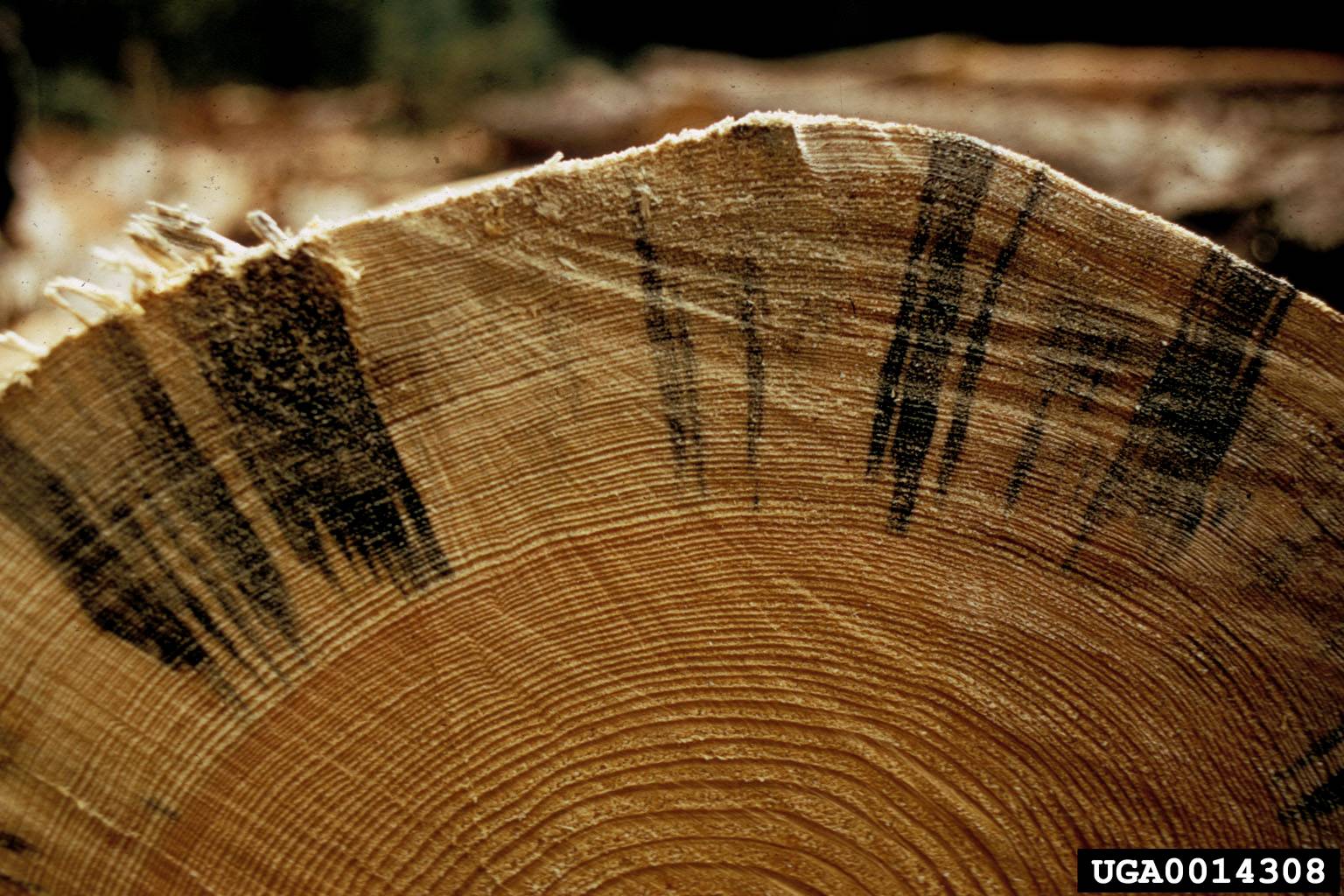
Oak wilt is caused by the fungus Bretziella fagacearum. It lives in the xylem, the vessels that carry water from the roots up through the tree. As the fungus spreads, the tree tries to wall it off by plugging its own vessels, and that defensive response is what kills it. Water movement stops, the canopy wilts, and the tree dies.
There are two ways it moves. Sap beetles are drawn to fungal mats that form under the bark of infected oaks, pick up spores, and carry them to fresh wounds on healthy trees. That includes pruning cuts, storm breaks, and construction damage. The second route is underground. Oaks of the same species growing near each other often fuse roots, and the fungus travels directly through those connections. This is why oak wilt shows up as an expanding pocket rather than scattered single trees, and it is why the City of Aiken trenched around the infected trees on Charleston Street before removing them.
Not all oaks respond the same way. Red oak group species, which includes water oak, willow oak, laurel oak, southern red oak, and black oak, can die within weeks to a few months. White oak group species decline more slowly and sometimes hold on for years. The trees being lost in Aiken are overwhelmingly water oaks.
Symptoms to look for on your oaks
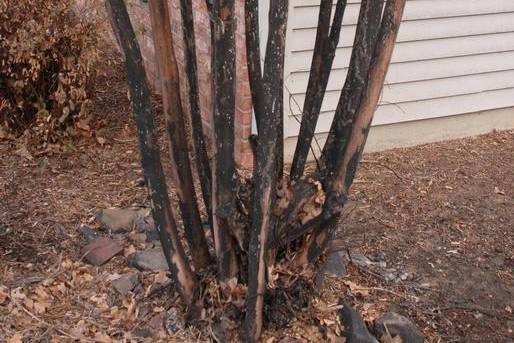
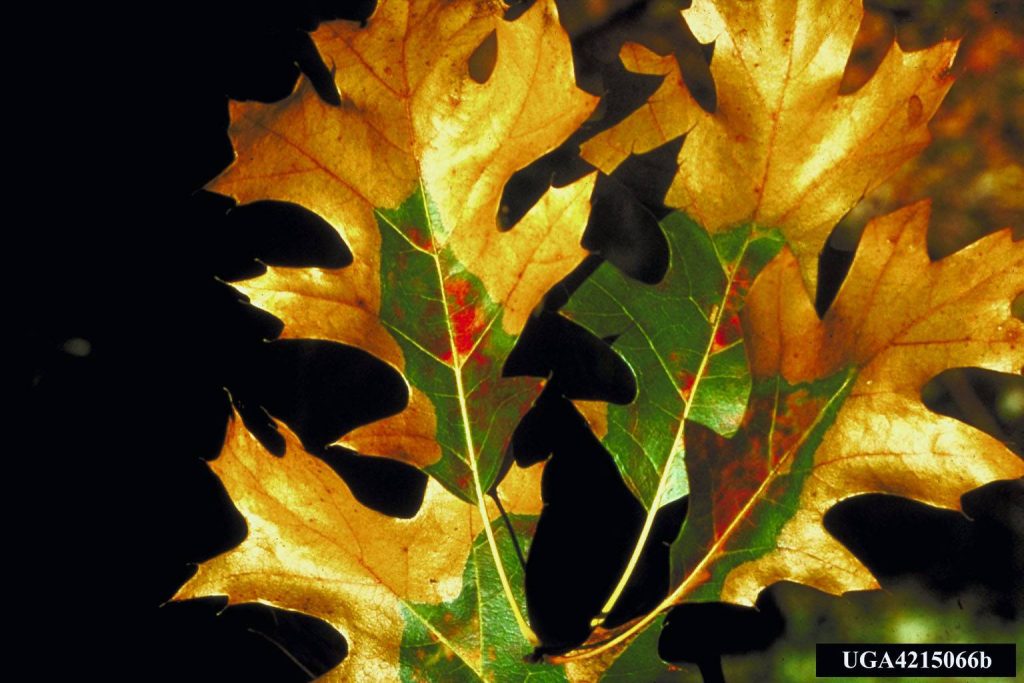
The sequence is fast. Leaves discolor, wilt, and drop while still partly green, usually starting high in the canopy and working down. On a red oak species, a tree that looked fine in spring can be bare by late summer.
Watch for rapid leaf discoloration, browning or bronzing that often begins at the top of the tree. Watch for wilting that progresses over weeks rather than across seasons. Watch for premature leaf drop, with leaves falling while still showing green at the base. Watch for a dead or thinning section of canopy that keeps expanding. And watch for several neighboring oaks declining in sequence, in a line or a pocket rather than randomly across the property.
What makes this difficult is that drought produces some of the same symptoms. The CSRA is running well below normal rainfall this year, and drought-stressed oaks also thin, scorch, and drop leaves early. The difference is usually speed and pattern. Drought decline is gradual and hits several species at once. Oak wilt is fast, and it moves through oaks specifically, tree to tree.
This is why nobody should diagnose oak wilt by eye, including us. When the city removed a large water oak at South Boundary Avenue and Whiskey Road in July, the city arborist described the case as suspected rather than confirmed. Confirmation requires a laboratory test on properly collected samples.
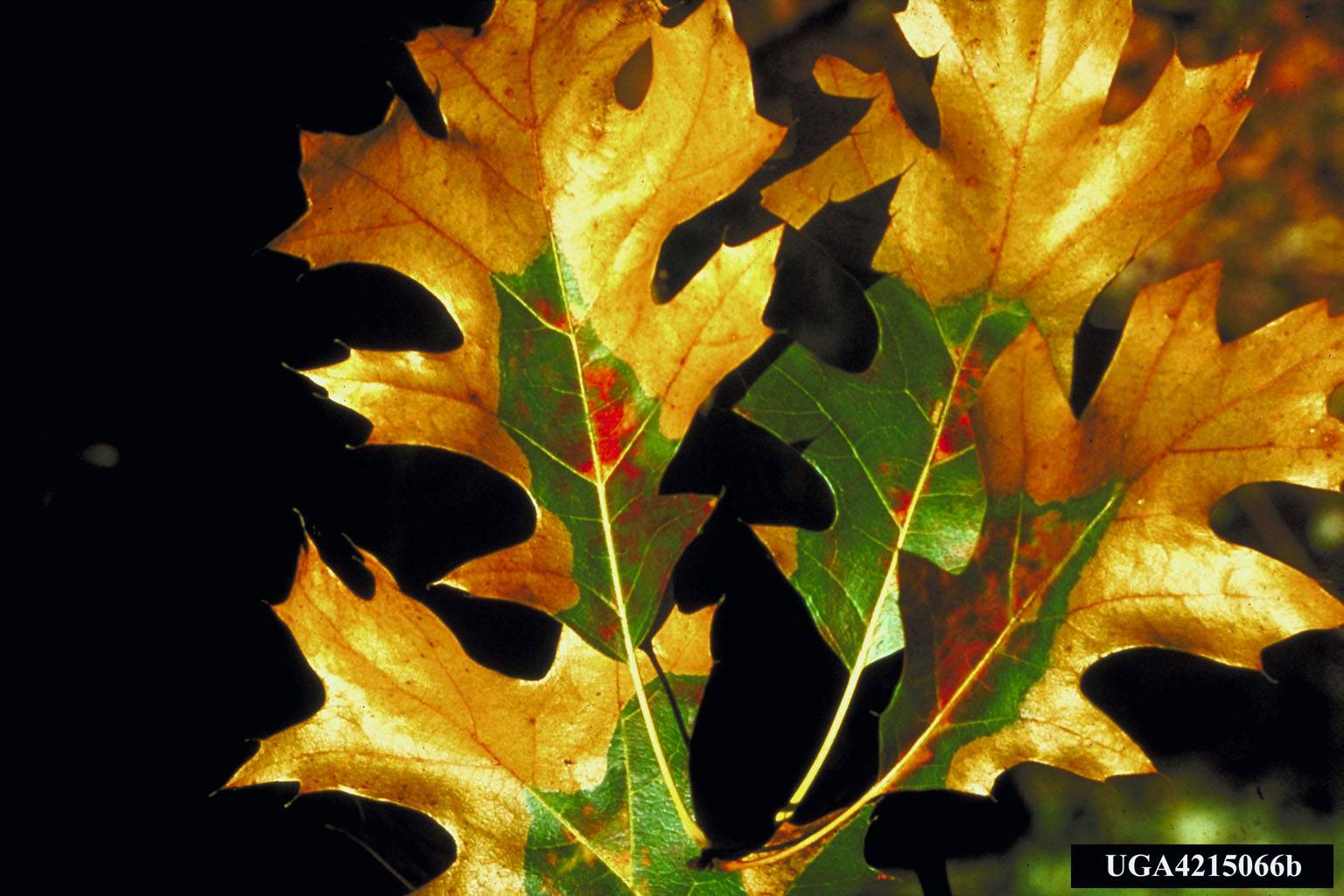
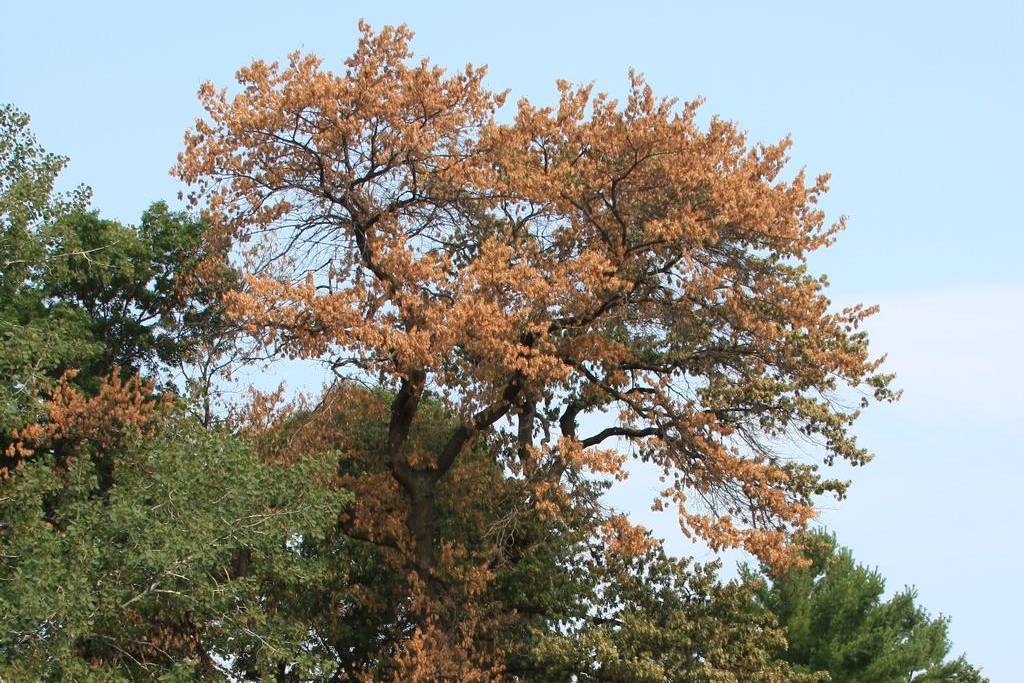
Where oak wilt has been found in Aiken
Clemson lists oak wilt as present in nine South Carolina counties, and Aiken is one of them. Inside the city, the disease has been confirmed or suspected in a number of areas.
In January the city removed 22 water oaks from the parkway on Charleston Street S.E. after testing confirmed oak wilt, trenching around the site first to cut root connections. Additional areas of concern that city officials have identified include Old Airport Road, Banks Mill Road in the Gatewood neighborhood, Dupont Street, Chesterfield Street South, and Hampton Avenue between Florence and Greenville streets. In July, three more oaks were removed on Chesterfield Street South and a 65 foot water oak came out at South Boundary Avenue and Whiskey Road.
The response has been substantial. Aiken Streetscapes funded preventive fungicide treatment for the 178 live oaks that form the canopy over South Boundary Avenue, and a $1 million donation to the Aiken Streetscapes Fund is supporting removal and replanting. The city has also been running education sessions for tree care companies through Clemson Extension. For a city whose tree canopy is valued at roughly $130 million, that level of response tells you how seriously this is being taken.
If you have mature oaks in or near any of these areas, it is worth having them looked at.
The pruning rule that matters most right now
Do not prune oaks in summer. This is the single most useful thing a homeowner can do about oak wilt, and it costs nothing.
Fresh pruning cuts release sap that attracts the same beetles that carry oak wilt spores. During the warm months when those beetles are most active, an open cut is an invitation. The guidance being used in Aiken is to avoid pruning oaks from May through July. Some regions extend that window earlier into spring, and the safest approach is simply to keep all oak pruning in the dormant season, roughly November through February.
If a limb has to come off during the high risk period because it is an immediate hazard, the cut should be sealed right away. Wound dressing is generally discouraged in modern arboriculture, but oak wilt is the recognized exception to that rule.
The same logic applies to anything else that wounds an oak: trenching, construction, cabling work, and string trimmer damage at the base. Timing matters more than most people realize.
What to do if you suspect oak wilt
Stop pruning first. Do not remove limbs, and do not let anyone else. Every fresh cut is a potential infection point for the trees around it.
Photograph what you see. Take wide shots of the whole tree plus closer shots of the affected canopy, and note the date. A record of how fast the decline is moving is genuinely useful diagnostic information.
Report it. Suspected cases in Aiken County can be reported to Clemson Extension at 803-649-6297.
Get samples collected properly. Confirmation requires branch samples taken from the right part of the tree at the right stage of decline. Samples pulled from a long dead tree usually will not yield a usable result, which is why waiting until the tree is fully brown works against you.
Then look at the neighbors. Because the fungus travels through root grafts, the oaks closest to an infected tree are the ones most at risk, and usually the ones worth protecting.
Treatment and prevention options
There is no cure for an oak already well into decline from oak wilt. What can be done falls into three categories, and they are often used together.
Root graft disruption
Trenching between an infected tree and its healthy neighbors severs the underground connections the fungus travels through. This is what the city did on Charleston Street. It has to reach sufficient depth and be placed correctly to work, and it is most useful when there is a defined pocket to contain.
Preventive fungicide injection
High value oaks that are not yet infected can be treated with a systemic fungicide injected at the root flare. This is preventive rather than curative, and it has to be repeated on a cycle. It is the approach used on the live oaks along South Boundary Avenue.
Removal and proper disposal
Confirmed infected trees, particularly red oak species, need to come out, and the wood has to be handled correctly rather than stacked as firewood or left on site. Fungal mats forming under the bark are exactly how beetles pick up spores in the first place.
Which combination makes sense depends on confirmation, the species involved, and what else is growing nearby. That is a site assessment question rather than a menu selection. Arborwright handles sampling and lab submission, root graft trenching, preventive injection, and removal, so the recommendation is not limited by what we happen to offer.
What we are seeing in Aiken and North Augusta
Oak decline calls are up across our service area this year, and the drought is a genuine complicating factor. Most of what we look at in Aiken and North Augusta turns out to be drought stress, borers, or root problems rather than oak wilt. We are seeing the same pattern on the Georgia side, in Augusta, Evans, and Martinez, where mature water oaks in established neighborhoods are thinning for reasons that have nothing to do with disease.
That is not a reason to relax. It is a reason to get a real diagnosis instead of guessing, because the two situations call for opposite responses. A drought-stressed oak needs water, mulch, and root zone work, and it will often recover. An oak wilt pocket needs containment, and containment only works if you catch it early enough to protect the trees that are still healthy.
If you have mature oaks anywhere across the CSRA and something looks wrong, the useful move is to have someone confirm what you are dealing with before you make a decision you cannot reverse.
Frequently asked questions
Can oak wilt be treated once a tree is infected?
Not reliably. Once the fungus has moved through a red oak species, the tree is usually lost. Fungicide injection is a preventive treatment for healthy nearby oaks, not a rescue for one already in decline. White oak species sometimes respond better because the disease progresses more slowly.
Will oak wilt spread to my other trees?
Only to other oaks. It does not affect pines, crape myrtles, maples, or shrubs. The oaks at highest risk are those growing close enough to the infected tree to have fused roots with it, which is why containment focuses on the immediate neighbors.
Is it safe to use wood from an oak wilt tree as firewood?
No. Fungal mats can form under the bark and attract the beetles that spread spores. Wood from a confirmed infected oak should be handled and disposed of properly, not stacked in the yard or moved to another property.
How do I tell oak wilt from drought stress?
Usually by speed and pattern. Drought decline is gradual and affects several species across the property at once. Oak wilt moves fast and travels oak to oak, often forming an expanding pocket. Neither can be confirmed visually, so a lab test is the only way to be certain.